
Blog

Learn About Our Meetup

5000+ Members

MEETUPS

LEARN, CONNECT, SHARE

Join our meetup, learn, connect, share, and get to know your Toronto AI community. 

JOB POSTINGS

INDEED POSTINGS

Browse through the latest deep learning, ai, machine learning postings from Indeed for the GTA.

CONTACT

CONNECT WITH US

Are you looking to sponsor space, be a speaker, or volunteer, feel free to give us a shout.

Author: torontoai

[Research] SlimYOLOv3: Narrower, Faster and Better for Real-Time UAV Applications

Abstract: Drones or general Unmanned Aerial Vehicles (UAVs), endowed with computer vision function by onboard cameras and embedded systems, have become popular in a wide range of applications. However, real-time scene parsing through object detection running on a UAV platform is very challenging, due to limited memory and computing power of embedded devices. To deal with these challenges, in this paper we propose to learn efficient deep object detectors through channel pruning of convolutional layers. To this end, we enforce channel-level sparsity of convolutional layers by imposing L1 regularization on channel scaling factors and prune less informative feature channels to obtain “slim” object detectors. Based on such approach, we present SlimYOLOv3 with fewer trainable parameters and floating point operations (FLOPs) in comparison of original YOLOv3 (Joseph Redmon et al., 2018) as a promising solution for real-time object detection on UAVs. We evaluate SlimYOLOv3 on VisDrone2018-Det benchmark dataset; compelling results are achieved by SlimYOLOv3 in comparison of unpruned counterpart, including ~90.8% decrease of FLOPs, ~92.0% decline of parameter size, running ~2 times faster and comparable detection accuracy as YOLOv3. Experimental results with different pruning ratios consistently verify that proposed SlimYOLOv3 with narrower structure are more efficient, faster and better than YOLOv3, and thus are more suitable for real-time object detection on UAVs

https://medium.com/@cdossman/slimyolov3-narrower-faster-and-better-for-real-time-uav-applications-ad3c5b8a2cf9

submitted by /u/cdossman
[link] [comments]

Workday Data Science Interviews

In 2012, Workday launched a successful IPO valued at $9.5 billion.

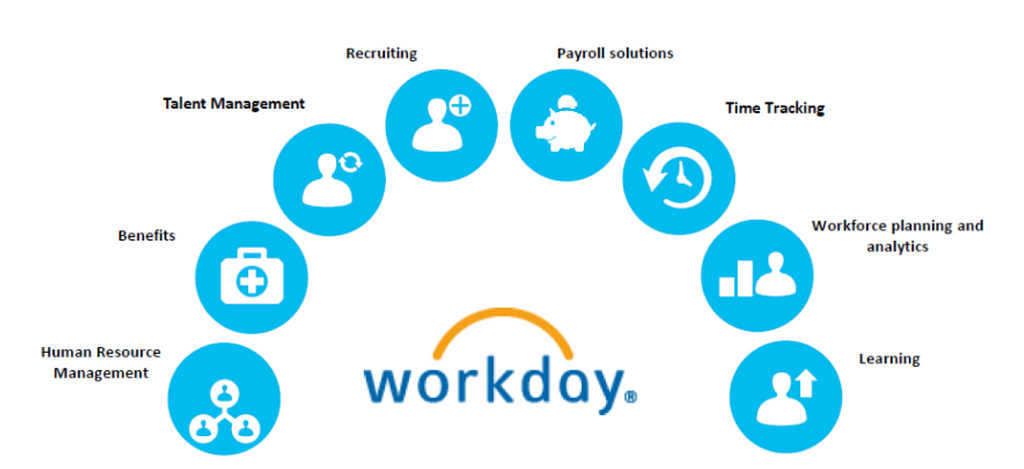
Workday is a leading provider of enterprise cloud applications for finance and human resources. It was founded in 2005. Workday delivers financial management, human capital management, planning, and analytics applications designed for the world’s largest companies, educational institutions, and government agencies. In January 2018, Workday announced that it acquired SkipFlag, makers of an AI knowledge base that builds itself from a company’s internal communications. In July 2018, they acquired Stories.bi to boost augmented analytics. These two acquisitions point towards an increased investment in the data science domain.

Source: cloudfoundation.com

Interview Process

The process starts with a phone screen with a recruiter. That is followed by a technical phone interview with hiring manager. The questions are typical machine learning and data science questions — with some data structures and algorithms questions. If both of those go well, there is an onsite interview.
The onsite consists of five interviews with different team members, hiring managers, and executives. The questions are about programming skills, algorithmic skills, data structures, and anything related to machine learning techniques.

Important Reading

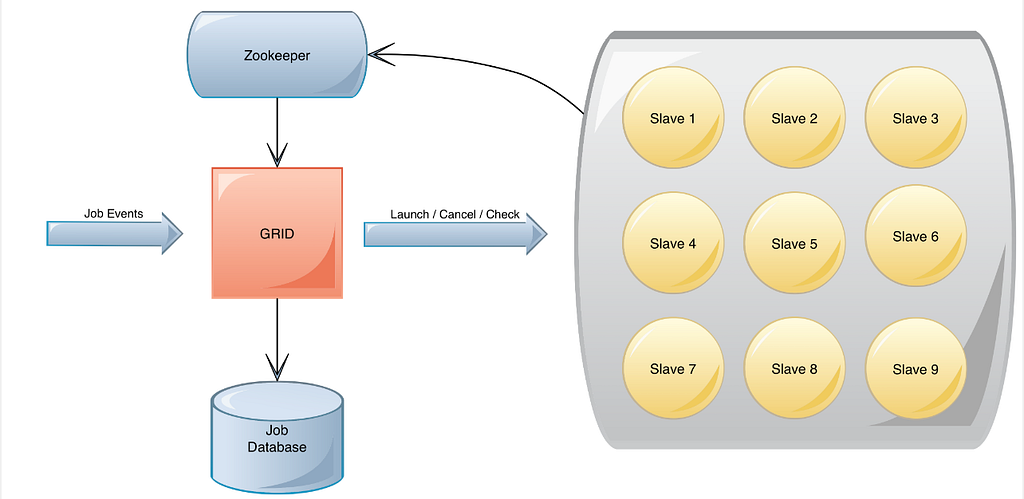
Source: https://workday.github.io/scala/2014/05/15/managing-a-job-grid-using-akka

Data Science Related Interview Questions

  • Given data from the world bank, provide insights on a small CSV file.
  • Write a C++ class to perform garbage collection.
  • Given 2 sorted arrays, merge them into 1 array. If the first array has enough space for 2, how do you merge the 2 without using extra space?
  • Given a huge collection of books, how would you tag each book based on genre?
  • Compare the classification algorithms
  • Logistic regression vs neural network
  • Integer array — get pairs of values that equal a certain target value.
  • How would you improve the complexity of a list merging algorithm from quadratic to linear?
  • What is p-value?
  • Perform a tweet correlation analysis and tweet prediction for the given dataset.

Reflecting on the Questions

The questions are highly technical in nature. They point towards a very strong requirement of having Data Scientists who can code very well. Workday is the employee directory in the cloud and there are interesting things that could be done based on data. A good inclination of a Data Scientists in coding can surely land a job with Workday!

Subscribe to our Acing Data Science newsletter. A new course to ace data science interviews is coming soon. Sign up below to join the waitlist!

Acing Data Science Interviews

Thanks for reading! 😊 If you enjoyed it, test how many times can you hit 👏 in 5 seconds. It’s great cardio for your fingers AND will help other people see the story.


Workday Data Science Interviews was originally published in Acing AI on Medium, where people are continuing the conversation by highlighting and responding to this story.

Forget Storming Area 51, AI’s Helping Astronomers Scour the Skies for Habitable Planets

Imagine staring into the high-beams of an oncoming car. Now imagine trying to pick out a speck of dust in the glare of the headlights.

That’s the challenge Olivier Guyon and Damien Gratadour face as they try to find the dull glint of an exoplanet — a planet orbiting a star outside our solar system — beside the bright light of its star.

The pair — Guyon is an instrument developer for Japan’s Subaru Telescope and an astronomer at the University of Arizona, and Gratadour is an associate professor at the Observatoire de Paris and an instrument scientist at the Australian National University — spoke with AI Podcast host Noah Kravitz about how they’re using GPU-powered extreme adaptive optics in very large telescopes to image nearby habitable planets.

Sighting an exoplanet is difficult because its light is “millions or a billion times fainter than the star around which it orbits,” according to Guyon.

Then comes the issue of the Earth’s atmosphere. The telescopes that Guyon and Gratadour work with are based on the ground. So their images experience atmospheric turbulence. The effect, Gratadour explains, is “similar to what you see above a hot road during the summer.”

Adaptive optics algorithms — accelerated by GPUs — can correct for this turbulence by using high performance computing, sharpening an image in real time. These corrections occur through a mechanical process called compensation, in which a deformable mirror behind the focus of the telescope is adjusted every millisecond. The result is a near-perfect image.

Astronomers can use this image to separate the faint light of an exoplanet from its star. Then, they can take a spectrum, or a graph of the different colors of light coming from the planet. Spectra can reveal the planet’s composition along with the presence of “water, methane and even plant life,” according to Guyon.

Guyon works on the Subaru Telescope in Japan, but this process is occurring at several very large telescopes. “Multiple teams are essentially racing,” he says. “We are all extremely impatient, because we know the planets are out there and we want to be able to image it.”

Gratadour is working on the next generation of telescopes, which should be ready for use in 2025. Today’s very large telescopes are 8 to 10 meters in length. The next generation of telescopes will be 4 to 5x as large, and will produce 25x as much computing power as their predecessors.

Temperate exoplanets bring up the possibility of extraterrestrial life. Asked about the existence of aliens, Guyon and Gratadour say there’s almost certainly life beyond our planet. The real questions to ask, Guyon says: “How frequent is it? How frequently does it evolve from bacteria or very simple forms of life to things that are much more complex like us? What does it become?”

To learn more about the work of scientists like Guyon and Gratadour, check out the websites of very large telescopes like the Subaru and Gemini.

Help Make the AI Podcast Better

Have a few minutes to spare? Fill out this short listener survey. Your answers will help us make a better podcast.

How to Tune in to the AI Podcast

Get the AI Podcast through iTunes, Castbox, DoggCatcher, Overcast, PlayerFM, Podbay, PodBean, Pocket Casts, PodCruncher, PodKicker, Stitcher, Soundcloud and TuneIn. Your favorite not listed here? Email us at aipodcast [at] nvidia [dot] com.

Featured image credit: NASA/JPL-Caltech

The post Forget Storming Area 51, AI’s Helping Astronomers Scour the Skies for Habitable Planets appeared first on The Official NVIDIA Blog.
[D] Too many hyperparameters to tune too little time

I’m working on a model with heaps of hyperparameters. It is infeasible to test all combinations so I’ve come up with an attempt to tuning, but I don’t know whether the method is valid. Say I have hyperparameters A, B, and C, each with 3, 4 and 5 options each. Now my plan is to set a baseline, say A:1, B:1, C:1. Then I vary the options of A keeping B and C constant. Hypothetically A:3, B:1, C:1 beats the initial baseline. Now I set A:3, B:1, C:1 to be my new baseline and I vary hyperparameter B. I repeat this process until all parameters have been varied. Then I start out with A again. The assumption here is that hyperparameters influence the performance which I know not to be true.

Can this method be seen as a genuine attempt to tuning? If it is: does anyone know of any references where this or a similar tuning method is used? If not: is there a better method? Furthermore, I’d like to know how you deal with having a lot of hyperparameters.

submitted by /u/matigekunst
[link] [comments]

[P] Feature Engineer Optimization in HyperparameterHunter 3.0

A full description of the new feature engineering optimization capabilities can be found in this Medium story.

TL;DR: HyperparameterHunter 3.0 adds support for feature engineering optimization. Define different feature engineering steps as normal functions, then let HyperparameterHunter keep track of the steps performed for Experiments, so you can optimize them just like normal hyperparameters, and learn from past Experiments automatically.

HyperparameterHunter is a scaffolding for ML experimentation and optimization. Run one-off Experiments or perform hyperparameter optimization, and HH automatically saves the model, hyperparameters, data, CV scheme, and now feature engineering steps, along with much more. Future optimization will scour your saved Experiments for those compatible with the current search space and use them to automatically jump-start learning.

  • Stop keeping janky lists of all your Experiments’ conditions and results
  • Ensure optimization actually has sufficient data to be useful
  • Let no Experiment be wasted

If you love HyperparameterHunter, I’d like to ask you for your support (yes, you, the attractive one reading this). Starring our GitHub repo, applauding the Medium story, and telling your friends (or enemies) about HyperparameterHunter would be very much appreciated!

If you’d like to do more and offer some feedback, open an issue, or contribute code, I would treasure the opportunity to learn from experts such as yourselves!

submitted by /u/HunterMcGushion
[link] [comments]

[D] Open letter question for people working on automation

Crosspost to /r/DataScience I am deeply worried about automation personally and it is one of the driving reasons. On par with climate change that I don’t want to have any children. My question is: Is it possible to start an open letter from people working on the automation of the most common jobs in America. If we are actually automating these jobs I think this could help build actual awareness and recognition from the media.

Some say it’s not possible to see job loss from automation. That other work “we can’t imagine” will take their place. I hate to sound pessimistic but I don’t really see that happening and/or I don’t see the call center worker or the truck driver being able to retrain for the “jobs of the future.”

I saw someone in a different sub suggest an open letter where professionals could sign in support of the fact that this is in fact happening. None of the political candidates are talking about this. This is as important as the climate, if we have 25% unemployment riots I think that’s going to be as bad or worse than rising sea levels. Do you think this could get traction? Or am I totally off base, sorry I’m not a professional just a guy worried about the future.

submitted by /u/jmknmecrzy
[link] [comments]

[D] Is there a neuroscience / cognitive research equivalent to the relational inductive bias in machine learning?

The human decision-making is heavily influenced by beliefs, biases and heuristics. The decision-making in (inductive) machine learning algorithms is grounded in inductive biases. I was wondering if we can establish a connection between both. In particular, I am interested in bridging the gap for the following example:

Say, we have a few lego blocks on the table that are randomly arranged. If we ask us humans to move one block passed another without interfering with it, we will analyze structure in the perceptual input and decompose the scene into entities, relations and relational constraints. We will also access our knowledge/models about objects (Sperkle et al., “Core knowledge”) and will use our beliefs and experience to find an appropriate solution.

Now, I would argue that if we ask the same thing a robot, we would require similar decision-making capabilities. I would further argue that we require two key components:

  1. a forward model of objects or the scene (to “hallucinate” consequences)
  2. A relational inductive bias that allows to exploit structure and impose constraints on relations and interactions of entities during learning the forward model.

Assuming my assumptions are correct, I was wondering if I can make a connection between human decision-making and such a machine intelligence model. Is there something similar in human decision-making for the decomposition of a scene into entities and relations that is related to a machine learning (inductive) bias?

Thanks a lot!

submitted by /u/whiletrue2
[link] [comments]

[Discussion] Is there previous research on assessment / evaluation model for franchises, credit status, etc?

Hi all /r/machinelearning.

I’ve recently looked for the previous researches on evaluation model for franchises, credit status and etc, where a target has many activities (like transaction, order, etc). Credit status of a person is one good example. It has the transaction history and income info and can be used as dataset.

I couldn’t find the one that seems fit to this subject. In my mind I may used a wrong keyword to find. What is the name of this field? It is not certainly NLP, or Image…

I will appreciate for any paper you recommend or keywords to search through google, or even the subject name of the field.

submitted by /u/gilgarad
[link] [comments]

[D] While detecting nucleus, can we use some prior?

Hi,

The default configurations of RCNN or Faster-RCNN are designed for VOC data-set. The data-set has many classes, and objects of different class are of different size. So, I think it is necessary to use different scales and zoom levels.

But in pathology images, all images are on same scale. Even the nuclei are comparable. So is there any particular configuration we should use for nucleus detection?
Any intuition and advice would be helpful.

submitted by /u/bay_der
[link] [comments]