Blog

Learn About Our Meetup

5000+ Members

MEETUPS

LEARN, CONNECT, SHARE

Join our meetup, learn, connect, share, and get to know your Toronto AI community. 

JOB POSTINGS

INDEED POSTINGS

Browse through the latest deep learning, ai, machine learning postings from Indeed for the GTA.

CONTACT

CONNECT WITH US

Are you looking to sponsor space, be a speaker, or volunteer, feel free to give us a shout.

Author: torontoai

[D] Creating a Product Code Picker – Azure ML

I’m looking for a ML solution to what I thought was a simple problem. I have say 20K product codes with descriptions and I’m trying to create a ML Model that will allow me to input a description and the model picks the most suitable product code. I’ve attempted this in Azure Machine Learning Studio , transform data > selecting columns > edit meta data > process text > Train Model ( Multiclass Neural Network) > Score model . My question is this the right methodology ? Is there a better way about things ?

I’m very much a ML dummy so please forgive my ignorance.

submitted by /u/MLDummy
[link] [comments]

[R] Practical Deep Learning with Bayesian Principles

Bayesian methods promise to fix many shortcomings of deep learning, but they are impractical and rarely match the performance of standard methods, let alone improve them. In this paper, we demonstrate practical training of deep networks with natural-gradient variational inference. By applying techniques such as batch normalisation, data augmentation, and distributed training, we achieve similar performance in about the same number of epochs as the Adam optimiser, even on large datasets such as ImageNet. Importantly, the benefits of Bayesian principles are preserved: predictive probabilities are well-calibrated and uncertainties on out-of-distribution data are improved. This work enables practical deep learning while preserving benefits of Bayesian principles. A PyTorch implementation will be available as a plug-and-play optimiser.

Arxiv: https://arxiv.org/abs/1906.02506

submitted by /u/ednops52
[link] [comments]

[D] Text detection – recognition – extraction

For a project, I need to get all the text off an image, in a structured format (sentences, paragraphs, etc.), and have it be accurate.

Most of my experiments have dealt with scene detection, which usually just detects text being there in a non structured. The out of the box OCR engines don’t seem to be accurate, as I’m hoping to run some NLP on top of the extracted data.

An idea I had was detecting sentences and paragraphs of text, cropping and OCRing the data until there is no more text on the page, but I found that text recognition isn’t that far along yet.

I’m looking for any help going forward, and hopefully come up with an end to end solution for this.

submitted by /u/cashshots
[link] [comments]

AWS DeepLens (2019 edition) zooms out to more countries around the world

At re:Invent 2017, we launched the world’s first machine learning (ML)–enabled video camera, AWS DeepLens. This put ML in the hands of developers, literally, with a fully programmable video camera, tutorials, code, and pre-trained models designed to expand ML skills. With AWS DeepLens, it is possible to create useful ML projects without a PhD in computer sciences or math, and anyone with a decent development background can start using it.
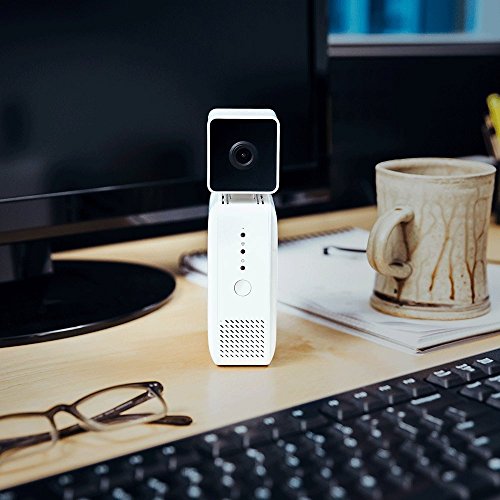
Today, I’m pleased to announce that AWS DeepLens (2019 edition) is now available for pre-order for developers in Canada, Europe, and Japan on the following websites:

  • Amazon.ca
  • Amazon.de
  • Amazon.es
  • Amazon.fr
  • Amazon.it
  • Amazon.co.jp
  • Amazon.co.uk

We have made significant enhancements to the device to further improve your experience:

  • An optimized onboarding process that allows you to get started with ML quickly.
  • Support for the Intel RealSense depth sensor, which allows you to build advanced ML models with higher accuracy. You can use depth data in addition to 2-D image inputs.
  • Support for the Intel Movidius Neural Compute Stick for those who want to achieve additional AI performance using external Intel accelerators.

The 2019 edition comes integrated with SageMaker Neo, which lets customers train models one time and run them with up to 2X improvement in performance.

In addition to device improvements, we have invested significantly in the content development as well. We included guided instructions for building ML for interesting applications such as worker safety, sentiment analysis, who drinks the most coffee, and so on. We’re making ML available to all who want to learn and develop their skills while building fun applications.

Over the last year, we have had many requests from customers in Canada, Europe, and Japan, asking when we would launch AWS DeepLens in their Region. We were happy to announce today’s news.

“We welcome the general availability of AWS DeepLens in Japan market. It will excite our developer community and developers in Japan to accelerate the adoption of deep learning technologies” said Daisuke Nagao and Ryo Nakamaru, co-leads for Japan AWS User Group AI branch (JAWS-UG AI).

ML in the hands of everybody

Amazon and AWS have a long history with ML and DL tools around the world. In Europe, we opened an ML Development Center in Berlin back in 2013, where developers and engineers support our global ML and DL services such as Amazon SageMaker. This is in addition to the many customers, from startups to enterprises to the public sector, who are using our ML and DL tools in their Regions.

ML and DL have been a big part of our heritage over the last 20 years and the work we do around the world, is helping to democratize these technologies, making them accessible to everyone.

After we announced the general availability of AWS DeepLens in the US in June last year, thousands of devices shipped.  We have seen many interesting and inspirational applications. Two that we’re excited to highlight are the DeepLens Educating Entertainer, or “Dee” for short, and SafeHaven.

Dee—DeepLens Educating Entertainer

Created by Matthew Clark from Manchester, Dee is an example of how image recognition can be used to make a fun, interactive, and educational game for young or less able children.

The AWS DeepLens device asks children to answer questions by showing the device a picture of the answer. For example when the device asks, “What has wheels?”, the child is expected to show it an appropriate picture, such as a bicycle or bus. Right answers are praised and incorrect ones are given hints on how to get it right. Experiences like these help children learn through interaction and positive reinforcement.

Young children, and some older ones with special learning needs, can struggle to interact with electronic devices. They may not be able to read a tablet screen, use a computer keyboard, or speak clearly enough for voice recognition. With video recognition, this can change. Technology can now better understand the child’s world and observe when they do something, such as picking up an object or performing an action. This leads to many new ways of interaction.

AWS DeepLens is particularly appealing for children’s interactions because it can run its deep learning (DL) models offline. This means that the device can work anywhere, with no additional costs.

Before building Dee, Matthew had no experience working with ML technologies. However, after receiving an AWS DeepLens device at AWS re:Invent 2017, he soon got up to speed with DL concepts.  For more details, see Second Place Winner: Dee—DeepLens Educating Entertainer.

SafeHaven

SafeHaven is another AWS DeepLens application that came from developers getting an AWS DeepLens device at re:Invent 2017.

Built by Nathan Stone and Paul Miller from Ipswich, UK, SafeHaven is designed to protect vulnerable people by enabling them to identify “who is at the door?” using an Alexa Skill. AWS DeepLens acts as a sentry on the doorstep, storing the faces of every visitor. When a visitor is “recognized,” their name is stored in a DynamoDB table, ready to be retrieved by an Alexa Skill. Unknown visitors trigger SMS or email alerts to relatives or carers via an SNS subscription.

This has huge potential as an application for private homes, hospitals, and care facilities, where the door should only be opened to recognized visitors. For more details, see Third Place Winner: SafeHaven: Real-Time Reassurance. Re:invented.

Other applications

In Canada, a large Canadian discount retailer used AWS DeepLens as part of a complex loss prevention test pilot for its operations LATAM. A Calgary-based oil company tested out augmenting its sign-in process in its warehouse facilities, adding in facial recognition.

One of the world’s largest automotive manufacturers, headquartered in Canada, is building a use case at one of its plants to use AWS DeepLens for predictive maintenance as well as image classification. Additionally, an internal PoC for manufacturing has been built to show how AWS DeepLens could be used to track who takes and returns tools from a shop, and when.

The Northwestern University School of Professional Studies is developing a computer vision course for their data science graduate students, using AWS DeepLens provided by Amazon. Other universities have expressed interest in developing courses to use AWS DeepLens in the curriculum, such as artificial intelligence, information systems, and health analytics.

Summary

These are just a few examples, and we expect to see many more when we start shipping devices around the world. If you have an AWS DeepLens project that you think is cool and you would like us to check out, submit it to the AWS DeepLens Project Outline.

We look forward to seeing even more creative applications come from the launch in Europe, so check the AWS DeepLens Community Projects page often.


About the Authors

Rick Mitchell is a Senior Product Marketing Manager with AWS AI. His goal is to help aspiring developers to get started with Artificial Intelligence. For fun outside of work, Rick likes to travel with his wife and two children, barbecue, and run outdoors.


Announcing AWS DeepLens (2019 Edition): Now available for pre-order in seven new countries

We’re pleased to announce AWS DeepLens (2019 Edition), an update to the world’s first machine learning–enabled video camera. The new AWS DeepLens (2019 Edition) is available to purchase in the US and for the first time in seven new countries: UK, Germany, France, Spain, Italy, Japan, and Canada.

We have improved the hardware and software to make the device even easier to setup, allowing you to get started with machine learning more quickly. Many ML models run 2x faster on the device thanks to optimization with Amazon SageMaker Neo. We have also added new tutorials for construction worker safety (hard hat detection), coffee drinking detection, and sentiment analysis.

It’s been incredibly exciting to see so many of you get your start in machine learning using AWS DeepLens after we first launched the device in re:Invent 2017. The vast majority starts off with no machine learning experience at all, but quickly learn the basics using the pre-built models included with the device. Then, they move on to building their own deep learning models in Amazon SageMaker, which run directly on the device. Some have even gone on to get jobs as applied machine learning data scientists.

All the time, we hear from developers who have built cool projects using AWS DeepLens, from apps that read books to kids, to dog detectors, to yoga instructors. This one caught our eye. Ben Hamm —who had never even coded before—built an app called “Cats, Rats, A.I., Oh My!” Ben’s cat, Metric, is a keen hunter and so he needed a way to stop the cat from bringing his prey into the house. Ben built his own deep learning model in Amazon SageMaker that automatically identifies not only his cat, but whether it was carrying prey. He mounted an AWS DeepLens on his back porch. When it detected an incoming “gift” from his feline friend, it connected to an Arduino system that automatically locked the cat flap. Genius.

To see how AWS DeepLens helped, and how Ben built his own computer vision model in Amazon SageMaker, look at his five-minute Ignite presentation.

You can find 23 more AWS DeepLens projects that developers have shared with us, including American Sign Language interpretation. We’d love to hear about yours, too.

International pre-orders available now

We are excited to bring AWS DeepLens (2019 Edition) to customers around the world for the first time. We got the chance to show the device to our friends at the Japan AWS User Group (the largest cloud computing user group in the world).

Daisuke Nagao and Ryo Nakamaru, co-leads for the group commented: “We welcome the general availability of AWS DeepLens in Japan market. It will excite our developer community and developers in Japan to accelerate the adoption of deep learning technologies.” We couldn’t agree more.

AWS DeepLens (2019 Edition) is now available for pre-order on the following websites:

For more information about AWS DeepLens, look at the AWS DeepLens detail page, or browse posts on the AWS Machine Learning Blog.


About the Authors

Rick Mitchell is a Senior Product Marketing Manager with AWS AI. His goal is to help aspiring developers to get started with Artificial Intelligence. For fun outside of work, Rick likes to travel with his wife and two children, barbecue, and run outdoors.


Amazon SageMaker Neo Helps Detect Objects and Classify Images on Edge Devices

Nomura Research Institute (NRI) is a leading global provider of system solutions and consulting services in Japan and an APN Premium Consulting Partner. NRI is increasingly getting requests to help customers optimize inventory and production plans, reduce costs, and create better customer experiences. To address these demands, NRI is turning to new sources of data, specifically videos and photos, to help customers better run their businesses.

For example, NRI is helping Japanese convenience stores use data from in-store cameras to monitor inventory. And, NRI is helping Japanese airports to optimize people flow based on traffic patterns observed inside the airport.

In these scenarios, NRI needed to create a machine learning models that detects objects. NRI needed to detect goods (drinks, snacks, paper products, etc.) and people that leave stores for retailers, and commuters for airports.

NRI turned to Acer and AWS to meet their goals. Acer aiSage, is an edge computing device that uses computer vision and AI to provide real-time insights.  Acer aiSage makes use of Amazon SageMaker Neo, a service that lets you train models that detect objects and classify images once and run them anywhere, and AWS IoT Greengrass, a service that brings local compute, messaging, data caching, sync, and machine learning inference capabilities to edge devices.

“One of our customers, Yamaha Motor Co., Ltd., is evaluating AI-based store analysis and smart store experience.” said Shigekazu Ohmoto, Senior Managing Director, NRI. “We knew that we had to build several computer vision models for such a solution. We built our models using MXNet GluonCV, compiled the models with Amazon SageMaker Neo, and then deployed the models on Acer’s aiSage through AWS IoT Greengrass.  Amazon SageMaker Neo reduced the footprint of the model by abstracting out the ML framework and optimized it to run faster on our edge devices. We leverage full AWS technology stacks including edge side for our AI solutions.”

Here is how object detection and image classification works at NRI.

Amazon SageMaker is used to train, build, and deploy the machine learning model. Amazon SageMaker Neo makes it possible to train machine learning models once and run them anywhere in the cloud and at the edge.

Amazon SageMaker Neo optimizes models to run up to twice as fast, with less than a tenth of the memory footprint, with no loss in accuracy. You start with a machine learning model built using MXNet, TensorFlow, PyTorch, or XGBoost and trained using Amazon SageMaker. Then, choose your target hardware platform. With a single click, Amazon SageMaker Neo compiles the trained model into an executable.

The compiler uses a neural network to discover and apply all of the specific performance optimizations to make your model run most efficiently on the target hardware platform. You can deploy the model to start making predictions in the cloud or at the edge.

At launch, Amazon SageMaker Neo was available in four AWS Regions: US East (N. Virginia), US West (Oregon), EU (Ireland), Asia Pacific (Seoul). As of May 2019, SageMaker Neo is now available in Asia Pacific (Tokyo), Japan.

To learn more about Amazon SageMaker Neo, see the Amazon SageMaker Neo webpage.


About the Authors

Satadal Bhattacharjee is Principal Product Manager with AWS AI. He leads the Machine Learning Engine PM team working on projects such as SageMaker Neo, AWS Deep Learning AMIs, and AWS Elastic Inference. For fun outside work, Satadal loves to hike, coach robotics teams, and spend time with his family and friends.


Kimberly Madia is a Principal Product Marketing Manager with AWS Machine Learning. Her goal is to make it easy for customers to build, train, and deploy machine learning models using Amazon SageMaker. For fun outside work, Kimberly likes to cook, read, and run on the San Francisco Bay Trail.


Sea of Green: NVIDIA Floods ISC with AI and HPC

The intersection of HPC and AI is extending the reach of science and accelerating the pace of innovation like never before. It’s driving discovery in scientific astrophysics, weather forecasting, energy exploration, molecular dynamics and many other fields.

That’s why over 3,000 people will flock to ISC High Performance 2019, in Frankfurt, Germany, next week. Attendees will descend on the annual supercomputing conference, running from June 16-20, for scores of talks, demos and workshops to explore the latest HPC breakthroughs.

Hear from NVIDIA Experts at ISC

GPUs are at the heart of accelerating HPC. That’s why you’ll find NVIDIA technology featured in a number of talks and workshops across the show.

Make sure not to miss:

Witness Groundbreaking Technology in Action

GPU computing is the most accessible and energy-efficient path forward for HPC and the data center.

At ISC, dozens of NVIDIA partners will demonstrate the importance of GPU acceleration through a range of exhibits and demos.

Look out for “NVIDIA partner” signs at booths including those from Dell EMC, HPE, Mellanox, Boston, One Stop Systems and Supermicro to discover GPU-powered demos. Across the show, you’ll also find:

  • The AI “Emoji” demo — Pass by one of these demo stations at our partners’ booths and get your emotion read in real time. The Emoji demo performs real-time face detection and can identify a whole range of emotions, including “neutral,” “happiness,” “surprise,” “sadness,” “anger,” “disgust,” “fear”  and “contempt.”
  • The Index Supernova demo — Large, 3D scientific simulations typically take about four months to create and generate over a terabyte of visualization data. With the NVIDIA IndeX SDK running on NGC, researchers can now view and interact with their data, make modifications and focus on the most pertinent parts of the data — all in real time.

Students Battle It Out in Cluster Challenge

For this year’s Student Cluster Competition, half of the teams have chosen to build based on NVIDIA V100 Tensor Core GPUs.

Over the course of three days, a total of 14 teams will have the chance to showcase systems of their own design and compete to achieve the highest performance across a series of standard HPC benchmarks and applications.

The winner will be announced on Wednesday, June 19, at 5:15 p.m. in Panorama 2.

Keep up to date on all things HPC and AI by following our social handles @NVIDIAEU and #ISC19.


Image courtesy of million-memories.com

The post Sea of Green: NVIDIA Floods ISC with AI and HPC appeared first on The Official NVIDIA Blog.

“[P]” An AI-Powered Domain Name Generator

Hey there, Saeed here from DeepNamer.com, we are glad that we can share our platform with you today:

DeepNamer is an AI-powered domain name generator and deep brainstorm platform that can help you find a catchy and creative domain name for your business for free. DeepNamer is built based on a deep sequence-to-sequence (i.e., keywords-to-domain) architecture, which utilizes the most recent natural language processing algorithms such as dynamic recurrent neural networks.

Note that we find our name DeepNamer via our AI algorithm and our platform inspired by the way startups names their businesses.

We would be happy to share our platform (DeepNamer.com) with you and any comment, feedback or suggestion would be appreciated.

submitted by /u/Refeb
[link] [comments]

Amazon SageMaker Neo Enables Pioneer’s Machine Learning in Cars

Pioneer Corp is a Japanese multinational corporation specializing in digital entertainment products. Pioneer wanted to help their customers check road and traffic conditions through in-car navigation systems. They developed a real-time, image-sharing service to help drivers navigate. The solution analyzes photos, diverts traffic, and sends alerts based on the observed conditions.  Because the pictures are of public roadways, they also had to ensure privacy by blurring out faces and license plate numbers.

Pioneer built their image-sharing service using Amazon SageMaker Neo. Amazon SageMaker is a fully-managed service that provides the ability for developers to build, train, and deploy machine learning models at much less effort and lower cost. Amazon SageMaker Neo is a service that allows developers to train machine learning models once and run them anywhere in the cloud and at the edge. Amazon SageMaker Neo optimizes models to run up to twice as fast, with less than a tenth of the memory footprint, with no loss in accuracy.

You start with an ML model built using MXNet, TensorFlow, PyTorch, or XGBoost and trained using Amazon SageMaker. Then, choose your target hardware platform such as M4/M5/C4/C5 instances or edge devices. With a single click, Amazon SageMaker Neo compiles the trained model into an executable.

The compiler uses a neural network to discover and apply all of the specific performance optimizations to make your model run most efficiently on the target hardware platform. You can deploy the model to start making predictions in the cloud or at the edge.

At launch, Amazon SageMaker Neo was available in four AWS Regions: US East (N. Virginia), US West (Oregon), EU (Ireland), Asia Pacific (Seoul). As of May 2019, SageMaker Neo is now available in Asia Pacific (Tokyo), Japan.

Pioneer developed a machine learning model for real-time image detection and classification using data from cameras in cars. They detect many different kinds of images, such as license plates, people, street traffic, and road signs. The in-car cameras upload data to the cloud and run inference using Amazon SageMaker Neo. The results are sent back to the cars so drivers can be informed on the road.

Here’s how it works.

“We decided to use Amazon SageMaker, a fully managed service for machine learning,” said Ryunosuke Yamauchi, an AI Engineer at Pioneer. “We needed a fully managed service because we didn’t want to spend time managing GPU instances or integrating different applications. In addition, Amazon SageMaker offers hyperparameter optimization, which eliminates the need for time-consuming, manual hyperparameter tuning. Also, we choose Amazon SageMaker because it supports all leading frameworks such as MXNet GluonCV. That’s our preferred framework because it provides state-of-the-art pre-trained object detection models such as Yolo V3.”

To learn more about Amazon SageMaker Neo, see the Amazon SageMaker Neo webpage.


About the Authors

Satadal Bhattacharjee is Principal Product Manager with AWS AI. He leads the Machine Learning Engine PM team working on projects such as SageMaker Neo, AWS Deep Learning AMIs, and AWS Elastic Inference. For fun outside work, Satadal loves to hike, coach robotics teams, and spend time with his family and friends.


Kimberly Madia is a Principal Product Marketing Manager with AWS Machine Learning. Her goal is to make it easy for customers to build, train, and deploy machine learning models using Amazon SageMaker. For fun outside work, Kimberly likes to cook, read, and run on the San Francisco Bay Trail.