Iam trying to train a convolutional variational autoencoder (CVAE) on computed tomography (CT) IMAGES (176X224 px) . The training data is normalized between 0 and 1 and Iam using approximately the same model structure as in keras autoencoder tutorial.
Biomedical researchers are embracing artificial intelligence to accelerate the implementation of cancer treatments that target patients’ specific genomic profiles, a type of precision medicine that in some cases is more effective than traditional chemotherapy and has fewer side effects.
The potential for this new era of cancer treatment stems from advances in genome sequencing technology that enables researchers to more efficiently discover the specific genomic mutations that drive cancer, and an explosion of research on the development of new drugs that target those mutations.
To harness this potential, researchers at The Jackson Laboratory, an independent, nonprofit biomedical research institution also known as JAX and headquartered in Bar Harbor, Maine, developed a tool to help the global medical and scientific communities stay on top of the continuously growing volume of data generated by advances in genomic research.
The tool, called the Clinical Knowledgebase, or CKB, is a searchable database where subject matter experts store, sort and interpret complex genomic data to improve patient outcomes and share information about clinical trials and treatment options.
The challenge is to find the most relevant cancer-related information from the 4,000 or so biomedical research papers published each day, according to Susan Mockus, the associate director of clinical genomic market development with JAX’s genomic medicine institute in Farmington, Connecticut.
“Because there is so much data and so many complexities, without embracing and incorporating artificial intelligence and machine learning to help in the interpretation of the data, progress will be slow,” she said.
That’s why Mockus and her colleagues at JAX are collaborating with computer scientists working on Microsoft’s Project Hanover who are developing AI technology that enables machines to read complex medical and research documents and highlight the important information they contain.
While this machine reading technology is in the early stages of development, researchers have found they can make progress by narrowing the focus to specific areas such as clinical oncology, explained Peter Lee, corporate vice president of Microsoft Healthcare in Redmond, Washington.
“For something that really matters like cancer treatment where there are thousands of new research papers being published every day, we actually have a shot at having the machine read them all and help a board of cancer specialists answer questions about the latest research,” he said.
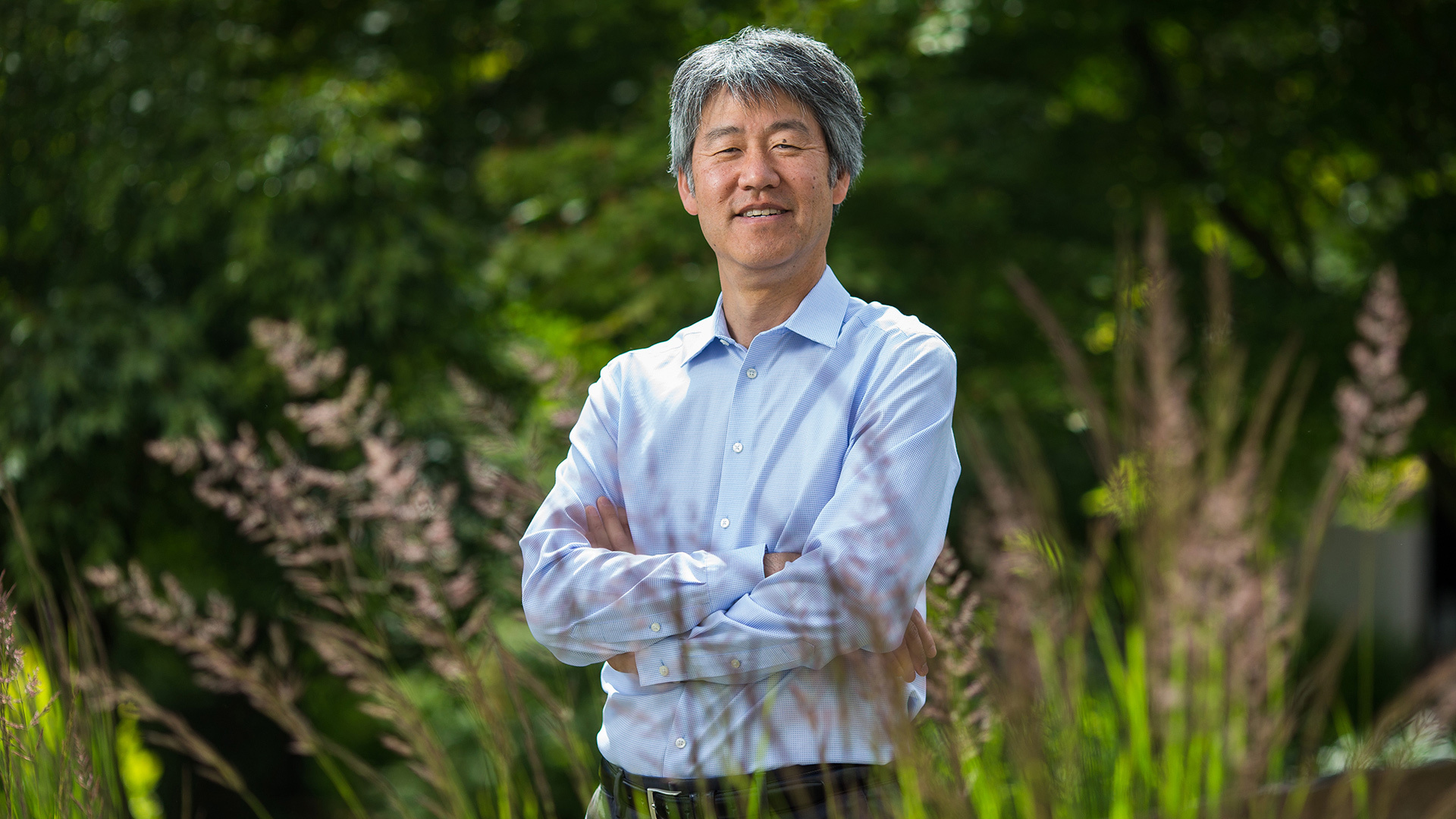
Peter Lee, corporate vice president of Microsoft Healthcare.
Curating CKB
Mockus and her colleagues are using Microsoft’s machine reading technology to curate CKB, which stores structured information about genomic mutations that drive cancer, drugs that target cancer genes and the response of patients to those drugs.
One application of this knowledgebase allows oncologists to discover what, if any, matches exist between a patient’s known cancer-related genomic mutations and drugs that target them as they explore and weigh options for treatment, including enrollment in clinical trials for drugs in development.
This information is also useful to translational and clinical researchers, Mockus noted.
The bottleneck is filtering through the more than 4,000 papers published every day in biomedical journals to find the subset of about 200 related to cancer, read them and update CKB with the relevant information on the mutation, drug and patient response.
“What you want is some degree of intelligence incorporated into the system that can go out and not just be efficient, but also be effective and relevant in terms of how it can filter information. That is what Hanover has done,” said Auro Nair, executive vice president of JAX.
The core of Microsoft’s Project Hanover is the capability to comb through the thousands of documents published each day in the biomedical literature and flag and rank all that are potentially relevant to cancer researchers, highlighting, for example, information on gene, mutation, drug and patient response.
Human curators working on CKB are then free to focus on the flagged research papers, validating the accuracy of the highlighted information.
“Our goal is to make the human curators superpowered,” said Hoifung Poon, director of precision health natural language processing with Microsoft’s research organization in Redmond and the lead researcher on Project Hanover.
“With the machine reader, we are able to suggest that this might be a case where a paper is talking about a drug-gene mutation relation that you care about,” Poon explained. “The curator can look at this in context and, in a couple of minutes, say, ‘This is exactly what I want,’ or ‘This is incorrect.’”
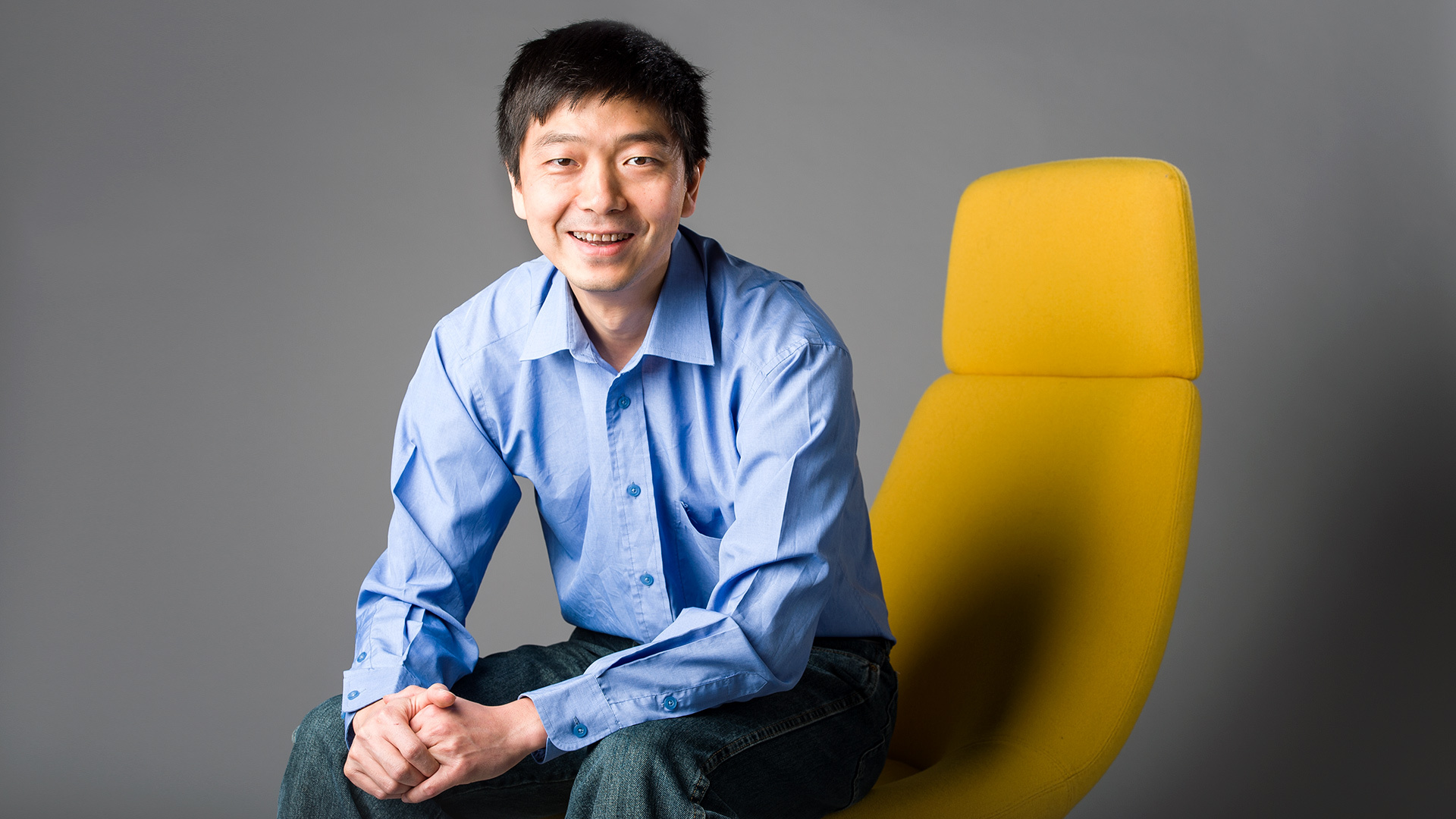
Hoifung Poon , director of precision health natural language processing with Microsoft’s research organization, is leading the development of Project Hanover, a machine reading technology.
Self supervision
To be successful, Poon and his team need to train machine learning models in such a way that they catch all the potentially relevant information – ensure there are no gaps in content – and, at the same time, weed out irrelevant information sufficiently to make the curation process more efficient.
In traditional machine reading tasks such as finding information about celebrities in news stories, researchers tend to focus on relationships contained within a single sentence, such as a celebrity name and a new movie.
Since this type of information is widespread across news stories, researchers can skip instances that are more challenging such as when the name of the celebrity and movie are mentioned in separate paragraphs, or when the relationship involves more than two pieces of information.
“In biomedicine, you can’t do that because your latest finding may only appear in this single paper and if you skip it, it could be life or death for this patient,” explained Poon. “In this case, you have to tackle some of the hard linguistic challenges head on.”
Poon and his team are taking what they call a self-supervision approach to machine learning in which the model automatically annotates training examples from unlabeled text by leveraging prior knowledge in existing databases and ontologies.
For example, a National Cancer Institute initiative manually compiled information from the biomedical literature on how genes regulate each other but was unable to sustain the effort beyond two years. Poon’s team used the compiled knowledge to automatically label documents and train a machine reader to find new instances of gene regulation.
They took the same approach with public datasets on approved cancer drugs and drugs in clinical trials, among other sources.
This connect-the-dots approach creates a machine learned model that “rarely misses anything” and is precise enough “where we can potentially improve the curation efficiency by a lot,” said Poon.
Collaboration with JAX
The collaboration with JAX allows Poon and his team to validate the effectiveness of Microsoft’s machine reading technology while increasing the efficiency of Mockus and her team as they curate CKB.
“Leveraging the machine reader, we can say here is what we are interested in and it will help to triage and actually rank papers for us that have high clinical significance,” Mockus said. “And then a human goes in to really tease apart the data.”
Over time, feedback from the curators will be used to help train the machine reading technology, making the models more precise and, in turn, making the curators more efficient and allowing the scope of CKB to expand.
“We feel really, really good about this relationship,” said Nair. “Particularly from the standpoint of the impact it can have in providing a very powerful tool to clinicians.”
I’ve recently started playing with ML, so far I’m thrilled with the results. I’ve been using https://app.nanonets.com which allows you to easily create and train models. The only thing that I don’t like about this is that I’m tied to this platform. I’d like to be able to achieve the same results using a third-party framework that I can host on my server, not having to depend on a platform.
I’ve done a few experiments, training a model to recognize castles, training a model to recognize panels on comic strips, so far so good.
I’m looking for a framework that allows me to do the same thing. The thing that I like about nanonets is that its simple. You just upload the images, label the content that you want to recognize and train the model, through a very simple and friendly UI.
Does anyone know a framework like this? That’s easy to use but doesn’t depend on a platform.
Imagine your Labrador’s smile on a lion or your feline’s finicky smirk on a tiger. Such a leap is easy for humans to perform, with our memories full of images. But the same task has been a tough challenge for computers — until the GANimal.
A team of NVIDIA researchers has defined new AI techniques that give computers enough smarts to see a picture of one animal and recreate its expression and pose on the face of any other creature. The work is powered in part by generative adversarial networks (GANs), an emerging AI technique that pits one neural network against another.
You can try it for yourself with the GANimal app. Input an image of your dog or cat and see its expression and pose reflected on dozens of breeds and species from an African hunting dog and Egyptian cat to a Shih-Tzu, snow leopard or sloth bear.
I tried it, using a picture of my son’s dog, Duke, a mixed-breed mutt who resembles a Golden Lab. My fave — a dark-eyed lynx wearing Duke’s dorky smile.
There’s potential for serious applications, too. Someday movie makers may video dogs doing stunts and use AI to map their movements onto, say, less tractable tigers.
The team reports its work this week in a paper at the International Conference on Computer Vision (ICCV) in Seoul. The event is one of three seminal conferences for researchers in the field of computer vision.
Their paper describes what the researchers call FUNIT, “a Few-shot, UNsupervised Image-to-image Translation algorithm that works on previously unseen target classes that are specified, at test time, only by a few example images.”
“Most GAN-based image translation networks are trained to solve a single task. For example, translate horses to zebras,” said Ming-Yu Liu, a lead computer-vision researcher on the NVIDIA team behind FUNIT.
“In this case, we train a network to jointly solve many translation tasks where each task is about translating a random source animal to a random target animal by leveraging a few example images of the target animal,” Liu explained. “Through practicing solving different translation tasks, eventually the network learns to generalize to translate known animals to previously unseen animals.”
Before this work, network models for image translation had to be trained using many images of the target animal. Now, one picture of Rover does the trick, in part thanks to a training function that includes many different image translation tasks the team adds to the GAN process.
The work is the next step in Liu’s overarching goal of finding ways to code human-like imagination into neural networks. “This is how we make progress in technology and society by solving new kinds of problems,” said Liu.
The team — which includes seven of NVIDIA’s more than 200 researchers — wants to expand the new FUNIT tool to include more kinds of images at higher resolutions. They are already testing it with images of flowers and food.
Liu’s work in GANs hit the spotlight earlier this year with GauGAN, an AI tool that turns anyone’s doodles into photorealistic works of art.
The GauGAN tool has already been used to create more than a million images. Try it for yourself on the AI Playground.
At the ICCV event, Liu will present a total of four papers in three talks and one poster session. He’ll also chair a paper session and present at a tutorial on how to program the Tensor Cores in NVIDIA’s latest GPUs.
I’ve been super intrigued by image super resolution problems. Reading online, I found the SRGAN paper to be interesting, especially how the PSNR and SSIM metrics are unreliable when compared to human perception of quality. I wanted to create a faster version of the SRGAN, so I decided to use a MobileNet as the generator. This idea is somewhat inspired by Realtime Image Enhancement, Galteri et al. I want to use it to upsample low quality videos, for scenarios when you may not have access to high speed internet. You can leverage the GPU to do synthetic super resolution. I would appreciate any ideas towards increasing speed/quality of this project.
Here is the implementation in Tensorflow 2.0: Fast-SRGAN. Take a look, and feedback is really appreciated!
The most interesting part is that based on the question, it will look up documents, and based on the question and information in the first set of retrieved documents, it’ll generate new queries to look up and find the exact document which as the answer. The concept itself isn’t new; it’s been a goal for the NLP/ML community for a while, but Stanford was able to do it by creating a dataset (not sure if that’s the entirely right word, they used ‘query generation supervision signal’) of these generated queries.
They generated the gold candidate queries by finding overlap of the content of the first set of retrieved content, and content of the the text that contains the answer. In their own words (and I think this is the most important part of the paper):
“ computing the longest common string/sequence between the current retrieval context and the title/text of the intended paragraph ignoring stop words, then taking the contiguous span of text that corresponds to this overlap in the retrieval context.”
Final thoughts: I love this paper. I’m really interested in dataset generation using very accurate / robust heuristics and models. I think these datasets can be used to trained some very effective language models for information retrieval. I am currently working on a project like this; I’m currently processing a dataset for research paper retrieval.