Blog

Learn About Our Meetup

5000+ Members

MEETUPS

LEARN, CONNECT, SHARE

Join our meetup, learn, connect, share, and get to know your Toronto AI community. 

JOB POSTINGS

INDEED POSTINGS

Browse through the latest deep learning, ai, machine learning postings from Indeed for the GTA.

CONTACT

CONNECT WITH US

Are you looking to sponsor space, be a speaker, or volunteer, feel free to give us a shout.

Author: torontoai

[R] Distributional concavity regularization for GANs (ICLR2019)

Openreview thread and paper and poster.

Spectral normalization was published by what seems to be roughly the same research group and has been one of few GAN modifications that improves GAN performance, reliably and significantly. This paper proposes a regularization term in the cost function that encourages the generator to maximize its entropy, in order to prevent mode collapse, which looks very promising.

However, I really can’t wrap my head around what they are actually doing, i.e. how to implement the regularization, the theory section is rather dense and I can’t find any implementations. Any pointers towards code or rough pseudocode would be very much appreciated.

submitted by /u/Darkwhiter
[link] [comments]

[D] Make BERT model smaller

We used BERT in one of the tasks we work on in our company. It worked incredibly well, and we want to try it in many other tasks.

The issue is that BERT is a huge model and requires a GPU both in training and inference. We want to find a way to utilize BERT without using GPU everywhere.

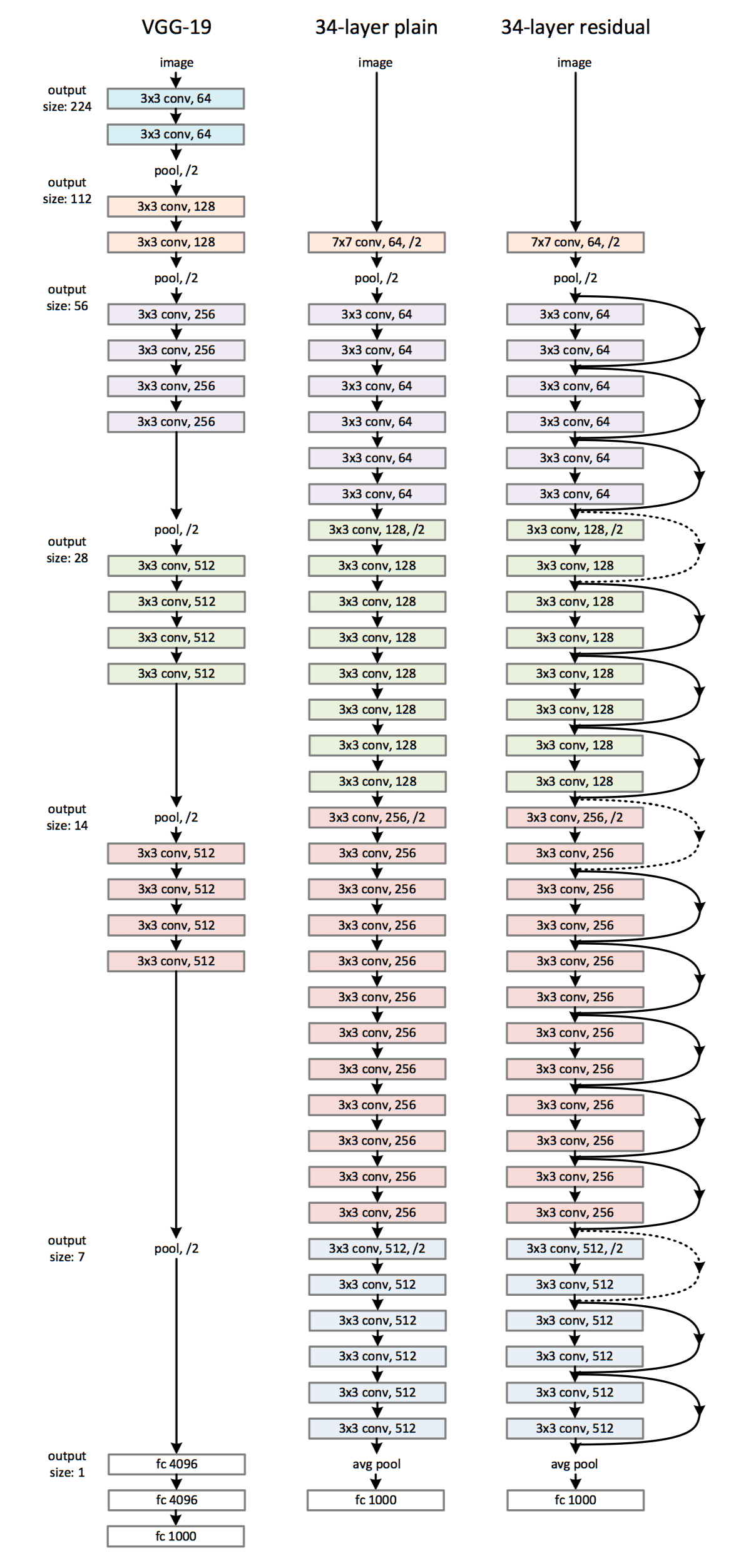
Is there a way to make BERT smaller or build some approximation model?

What we thought for now is:

  1. For some task, train a model using BERT on a small amount of data (what we currently have). If the results are good, “tag” a lot of data using this model and the train another, much smaller, model on the large artificially tagged data.

  2. Use part of the BERT layers, for example, take only 2-3 first attention layers out of 12 and fine-tune them.

Thanks.

submitted by /u/sudo_su_
[link] [comments]

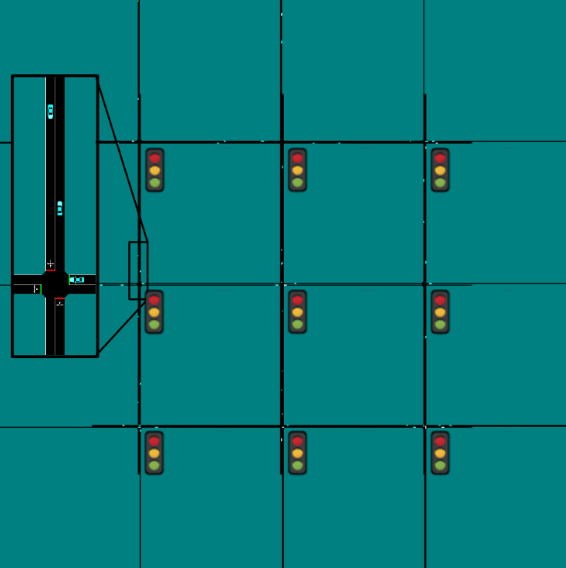
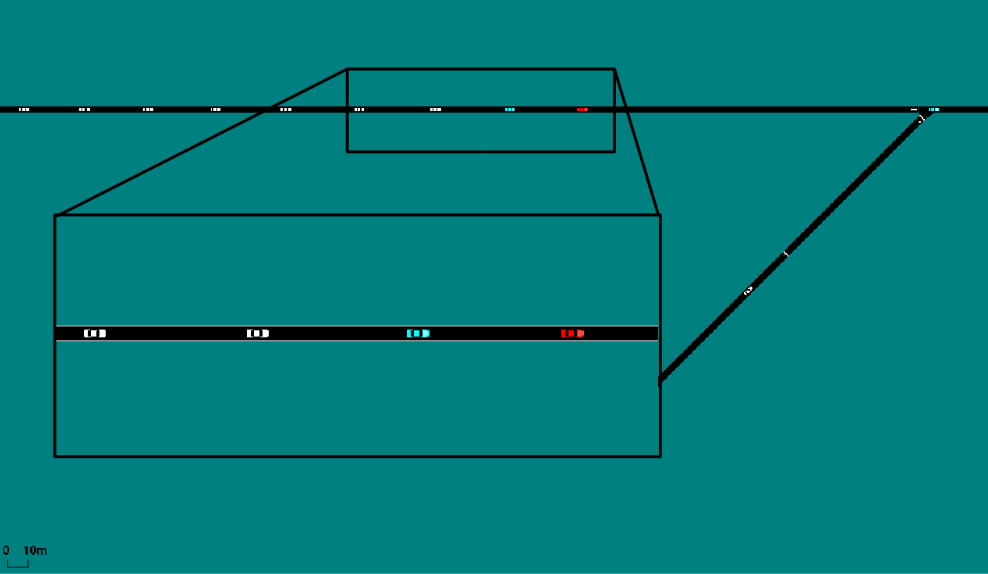
Autonomous Vehicles for Social Good: Learning to Solve Congestion

We are in the midst of an unprecedented convergence of two rapidly growing
trends on our roadways: sharply increasing congestion and the deployment of
autonomous vehicles. Year after year, highways get slower and slower: famously,
China’s roadways were paralyzed by a two-week long traffic jam in 2010. At the
same time as congestion worsens, hundreds of thousands of semi-autonomous
vehicles (AVs), which are vehicles with automated distance and lane-keeping
capabilities, are being deployed on highways worldwide. The second trend offers
a perfect opportunity to alleviate the first. The current generation of AVs,
while very far from full autonomy, already hold a multitude of advantages over
human drivers that make them perfectly poised to tackle this congestion. Humans
are imperfect drivers: accelerating when we shouldn’t, braking aggressively,
and make short-sighted decisions, all of which creates and amplifies patterns
of congestion.

Continue reading

[N] IEEE lifts its ban on Huawei employees

An email sent to IEEE members:

Last week the U.S. government issued export controls on Huawei Technologies Ltd and 68 of its affiliated companies. In response, IEEE issued guidance on actions required to comply with these controls. We acted promptly because we wanted to protect our volunteers and members from potential legal risk that could have involved significant penalties. As a non-political, not-for-profit organization registered in New York, IEEE must comply with its legal obligations under the laws of the United States and other jurisdictions. We also engaged the U.S. government to seek clarification on the extent to which these export control restrictions were applicable to IEEE activities.

I am pleased to report that this engagement was successful and we have revised our guidance to remove any restriction on the participation of the employees of these companies as editors or peer reviewers in the IEEE publication process. To reemphasize, all IEEE members can continue to participate in the open and public activities of the IEEE, including our scientific and technical publications.

Many members expressed apprehension with respect to IEEE’s initial guidance and its impact on editors and peer reviewers based on their employer affiliation. I understand the concern this raised for many of you and appreciate the feedback that IEEE leaders and I received.

As an international organization operating in 160 countries, IEEE supports the free and open exchange of scholarly and academic work and the global advancement of science and technology. IEEE is committed to enabling an environment of international cooperation and the sharing of our members’ wealth of knowledge to drive innovation.

We appreciate the patience of our members and volunteers as we worked through a legally complex situation. If you have any comments, questions, or concerns, please contact me at president@ieee.org.

For more information, please visit www.ieee.org.

Thank you for supporting IEEE in our mission to advance technology for humanity.

José M. F. Moura

2019 IEEE President and CEO

submitted by /u/shannoncoin
[link] [comments]

[D] Reading group substitute

While at university I used paper reading groups to keep on top of current developments in ML. However, now that Im in industry (in a non-research position), how do I maintain my knowledge of cutting edge ML progress? There isn’t enough time for me to read through every paper that is on here/arxivsanity.

Any tips?

submitted by /u/Maplernothaxor
[link] [comments]