Blog

Learn About Our Meetup

5000+ Members

MEETUPS

LEARN, CONNECT, SHARE

Join our meetup, learn, connect, share, and get to know your Toronto AI community. 

JOB POSTINGS

INDEED POSTINGS

Browse through the latest deep learning, ai, machine learning postings from Indeed for the GTA.

CONTACT

CONNECT WITH US

Are you looking to sponsor space, be a speaker, or volunteer, feel free to give us a shout.

Author: torontoai

[P] I have built a monitoring solution for ML models running in production – Looking for beta testers !

[P] I have built a monitoring solution for ML models running in production - Looking for beta testers !

Hi,

I’m Jacques and I’ve built https://stakion.io. Stakion is a monitoring and debugging solution for deployed Machine Learning models. It tracks input and output data distributions in real-time to detect drifts or new behaviors that might impact model performance.

On tops of alerts, it also provides tools to better understand / debug predictions. This is especially useful when answering queries from the wider business about why a certain prediction was made.

I am currently looking for beta-testers, here are the steps if you would like to try it out:

  1. https://dashboard.stakion.io/signUp and use “reddit” as the activation code
  2. Join Slack channel for support
  3. Once signed up, I will email you some more information to get started

I hope you like it and would love to get some feedback !

Cheers,

Jacques

stakion.io – Looking for Beta testers and feedback !

submitted by /u/jverre
[link] [comments]

Ultrasounds Where You Need Them: How AI Is Improving Diagnoses at Point of Care

In medical emergencies, a quick diagnosis based on the information at hand can be a matter of life or death.

The same can be true for non-emergencies. When limited medical equipment is available, delays in diagnosis can turn these situations into emergencies.

Ultrasound enables the accurate, efficient and non-invasive diagnosis of a host of ailments, including appendicitis, heart abnormalities and many urological and gynecological conditions.

But most emergency responders and medical professionals either aren’t trained or aren’t equipped to use the technology.

DESKi, a member of the NVIDIA Inception program, based in Bordeaux, France, is using AI to make ultrasound technologies more effective at the point of care for these personnel and their patients.

“The fact that two-thirds of the world population have no access to medical imaging technologies is a public health issue,” said Bertrand Moal, CEO at DESKi. “Ultrasound is non-invasive, affordable and can be used to diagnose ailments of multiple organs, which makes it the perfect tool to support diagnosis at the point of care, by non-specialists.”

Benefits of Ultrasound

To help those on the medical front lines make more accurate diagnoses and better informed decisions about patient care, DESKi has created DeepEcho.

This system combines deep learning algorithms, trained on NVIDIA DGX Station, and cutting-edge handheld ultrasound devices, which can be linked up to mobile phones and tablets, to deliver the expertise of cardiac health specialists in emergency situations.

Using a wealth of training data from leading cardiology units, DESKi has developed a series of neural networks that can determine whether or not the DeepEcho’s ultrasound probe is in the correct position for acquiring accurate and insightful views of the heart.

The company is also training its algorithms to automatically measure the left ventricle ejection fraction, which can help diagnose heart failure.

“By deploying ultrasound in the field with AI software, we’re helping to bring medical imaging expertise to those who need it most,” said Moal.


Protecting Patient Privacy

To train their deep learning algorithms, DESKi needs to collect high-quality data that has been reviewed and interpreted by cardiology experts.

Recently, the startup entered into a framework agreement with Bordeaux University Hospital for the development of AI projects, including DeepEcho.

Over 20,000 cardiac ultrasound examinations are performed by experienced cardiologists every year at the hospital. DESKi uses anonymized data from these examinations to train its deep learning algorithms.

To accelerate the training, DESKi turned to the power of NVIDIA DGX Station. The portability of the deskside supercomputer enabled them to build the initial framework in-house; when it was time to deploy, they transported the system to the hospital itself.

“By deploying NVIDIA’s DGX Station onsite in the hospital, we’re able to combine cutting-edge AI technology with cardiology expertise, all while ensuring that patient data is secure and never comes off premises,” noted Victor Ferrand, co-founder and CTO at DESKi.

In the future, DESKi plans to expand its tools to other specialties such as gynecology, gastroenterology and urology.

Learn more about their work with Bordeaux University Hospital in our webinar “Deep Learning for Automatic Cardiac Ultrasound Analysis.”

The post Ultrasounds Where You Need Them: How AI Is Improving Diagnoses at Point of Care appeared first on The Official NVIDIA Blog.

[R] How to Draw LSTM Architecture like Google Machine Translation?

Hello fellow people who are crazy enough to do machine learning,

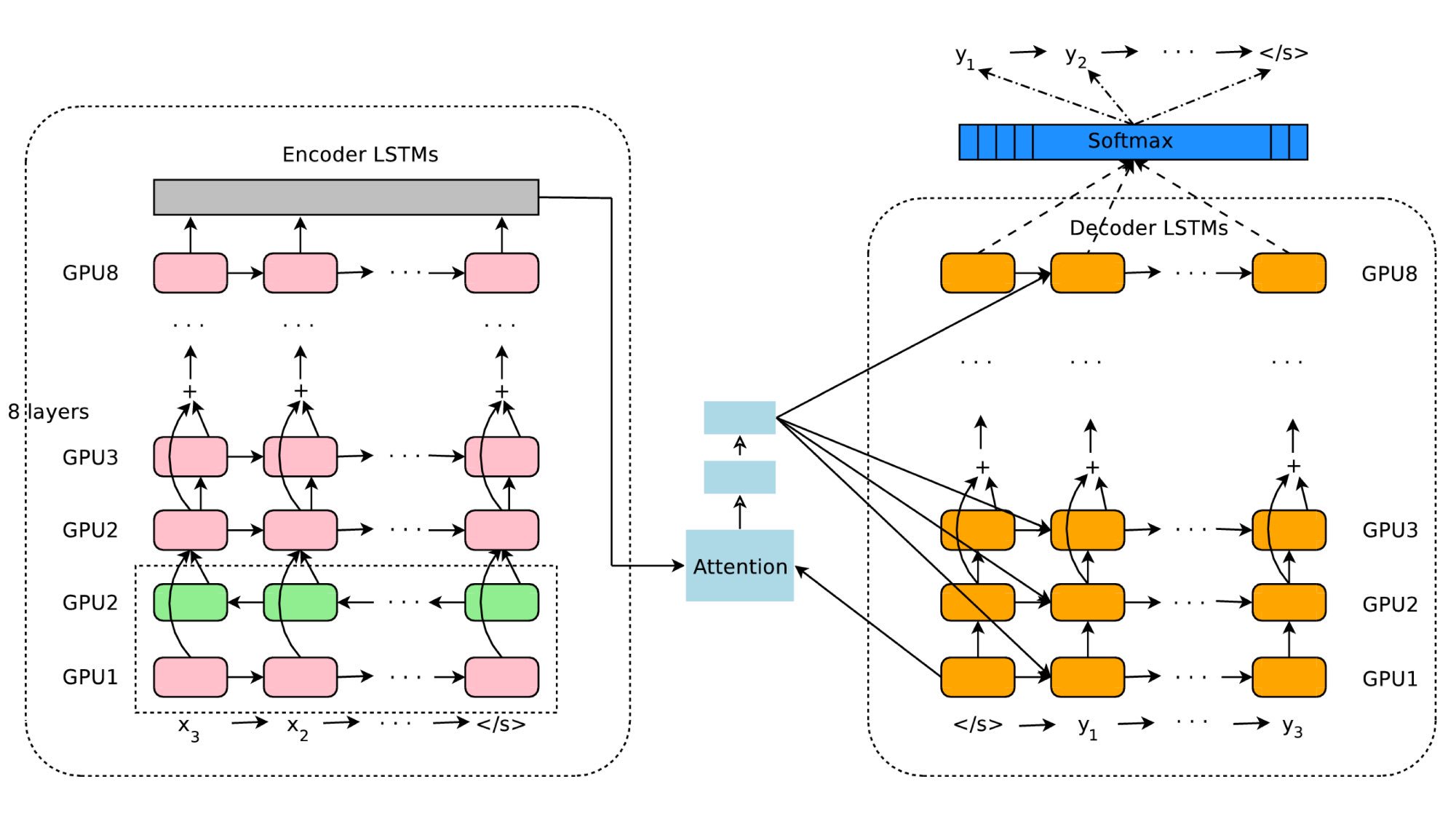
I’m writing a research paper that involves stacked LSTMs and some other fun ML models. What’s the best way to draw my architecture like how the Google machine translation team did? http://fastml.com/images/deep_learning_diagrams/google_neural_machine_translation_system.jpg

Edit: If you’re going to downvote this, at least tell me why 🙂

submitted by /u/yuh5
[link] [comments]

[D] Topics for an at work Machine Learning program at a Finance company

Hello!

I’ve been tasked with designing a beginner’s program to Machine Learning at work. The target crowd is a bunch of QuantFin professionals – so pretty adept with Stats and Programming.

Again, the target is to get them familiarized with the math behind and rationale for various techniques – rather than teaching them to code out, let’s say a Random Forest from scratch.

The reason being that, in our line of work, it’s completely okay to use a package, and it’s okay if you’re not making significant improvements to the method in itself. It’s more about acclimatizing them to the various techniques out there, so that the next time they come across a problem, they have a fair idea of what direction they can look in. I’m looking at a 40 hour programme, that eventually gives them some understanding of the underlying math and common applications

What are some topics that this forum thinks should be a part of such an effort?

submitted by /u/mrehanms
[link] [comments]

[D] How to detect/prevent fatal implementation bugs?

When you have an idea and implement it in a program and you don’t get the high accuracy that you hoped for, it could be because the idea itself doesn’t work or the implementation has a bug. If the low accuracy is due to a bug but you conclude that the idea doesn’t work, you could be tragically missing an important research result.

One way to solve the problem is to implement the idea twice, preferably with two people working independently, and compare their results. If the results (prediction and accuracy metrics) are the same for the same input, you conclude that both implementations were made as intended. If not, then you have to make them agree, examining differences and fixing bugs along the way. However, different implementations are bound to make different assumptions about various details and have different output even if there are no bugs. Even different ways of using a PRNG results in different results. Generally, it’s a very labor-intensive painstaking process that can take even more time than the initial implementation itself.

Are there other, more efficient, ways to ward off implementation errors that could doom one’s research?

submitted by /u/Syncopat3d
[link] [comments]

[P] Neural Network Gradient Sonification

Heavily inspired by the recent post by /u/perone I developed a Keras callback that can easily be included during training for all you Keras users out there. During training the callback will convert the gradient norms of the network layers to a tone which can be saved along with the spectrogram of the audio after training is completed.

Additionally, I looped over a parameter space by varying the activation function, optimizer, and learning rate. Most notably, tweaking the activation function and optimizer produced quite interesting results.

submitted by /u/nnatlab
[link] [comments]

[D] Can I use tf.data to calculate new features as part of a pipeline, or should this be done before using the tf.data module?

I am just curious about how much of the data processing process I can refactor into a tf.data pipeline for inputting my data into my model. My source data is used to calculate different features to create a dataset, and then this dataset is processed further for inputting into my models. So the process is basically like this:

Source Data (structured JSON which just has text fields for data parsed from a raw document) —>
Dataset (this fields are used to calculate numerical features, categorical features, and sequence features) —>
Processed Dataset (standard techniques – scaling, encoding, tokenization, padding, etc.)

And then I have my input data for the model. I am wondering whether I can refactor this entire process into a tf.data pipeline, or will the tf.data pipeline only handle the processing done in the second step described above? I am using TF 2.0 Beta by the way.

Any insights or help will be greatly appreciated.

submitted by /u/that_one_ai_nerd
[link] [comments]