Author: torontoai
Sr. Software Engineer – FullStack – [24]7.ai – Toronto, ON
From [24]7.ai – Thu, 19 Sep 2019 22:04:55 GMT – View all Toronto, ON jobs
[D] Back propagation alternative
I would like to start a discussion about solving deep networks without backprop. I have invented a mechanism in 2016 that uses no backprop at all and that can solve any network topology. The algorithm also scales almost lineary so you can double the performance using two machines.
Anyone interested?
submitted by /u/ToolTechSoftware
[link] [comments]
Senior Graphics Engineer – AI – NVIDIA – Toronto, ON
From NVIDIA – Thu, 19 Sep 2019 19:55:28 GMT – View all Toronto, ON jobs
Customer Facing Data Scientist – Toronto – DataRobot – Toronto, ON
From DataRobot – Thu, 19 Sep 2019 18:36:21 GMT – View all Toronto, ON jobs
[N] xBD Building Damage Dataset (+550k Annotations/+19k sq km) Available for Download (https://xview2.org/dataset)
![[N] xBD Building Damage Dataset (+550k Annotations/+19k sq km) Available for Download (https://xview2.org/dataset)](https://b.thumbs.redditmedia.com/IIIek1-lrubV053TU1uXVGUBOmLEClUmYDjD3o5wMGk.jpg "[N] xBD Building Damage Dataset (+550k Annotations/+19k sq km) Available for Download (https://xview2.org/dataset)") |
https://i.redd.it/hbjt6bvh4ln31.png The competition xBD dataset, annotated satellite imagery pre and post natural disasters for the xView2 Competition is now available for download here (upon e-mail registration): The dataset was announced at IEEE CVPR 2019(most up to date metrics are accurate at the website above however). The dataset creation was led by the Defense Innovation Unit with the technical expertise of Carnegie Mellon’s Software Engineering Institute (CMU SEI), CrowdAI and the Joint Artificial Intelligence Center, with data provided by MAXAR/DigitalGlobe’s Open Data Program. For more info on CMU SEI’s efforts in Humanitarian Assistance and Disaster Response (focus on XView Competitions starts at ~6:26): https://www.youtube.com/watch?v=UW5CP9YahG0 For more information on the competition: or you can visit our website: xview2.org. submitted by /u/nirav_diu |
Data Scientist – Loopio – Toronto, ON
From Loopio – Thu, 19 Sep 2019 17:28:24 GMT – View all Toronto, ON jobs
Build your ML skills with AWS Machine Learning on Coursera
Machine learning (ML) is one of the fastest growing areas in technology and a highly sought after skillset in today’s job market. Today, I am excited to announce a new education course, built in collaboration with Coursera, to help you build your ML skills: Getting started with AWS Machine Learning. You can access the course content for free now on the Coursera website.

The World Economic Forum [1] states that the growth of artificial intelligence (AI) could create 58 million net new jobs in the next few years, yet, it’s estimated that there are currently 300,000 AI engineers worldwide, but millions are needed [2]. This means that there is a unique and immediate opportunity to for you to get started learning the essential ML concepts that are used to build AI applications – no matter what your skill level. Learning the foundations of ML now will help you keep pace with this growth, expand your skills, and even help advance your career.
Based on the same ML courses used to train engineers at Amazon, this course teaches you how to get started with AWS Machine Learning. Key topics include: Machine Learning on AWS, Computer Vision on AWS, and Natural Language Processing (NLP) on AWS. Each topic consists of several modules deep-diving into a variety of ML concepts, AWS services, as well as insights from experts to put the concepts into practice. This course is a great start to build your foundational knowledge on Machine Learning before diving in deeper with the AWS Machine Learning Certification.
How it Works
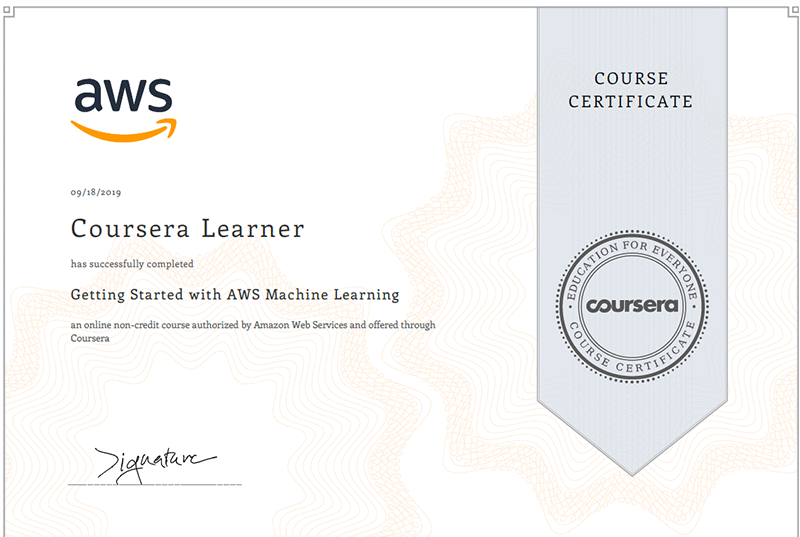
You can read and view the course content for free on Coursera. If you want to access assessments, take graded assignments, and get a post course certificate, it costs $49 in the USA and $29 in Brazil, Russia, Mexico, and India. If you choose the paid route, when you complete the course, you’ll get an electronic Certificate that you can print and even add to your LinkedIn profile to showcase your new found machine learning knowledge.
Enroll now to build your skills towards becoming an ML developer!
About the Author
 Tara Shankar Jana is a Senior Product Marketing Manager for AWS Machine Learning. Currently he is working on building unique and scalable educational offerings for the aspiring ML developer communities- to help them expand their skills on ML. Outside of work he loves reading books, travelling and spending time with his family.
[1] Artificial Intelligence to Create 58 Million New Jobs by 2022, Says Report (Forbes)
[2] Tencent says there are only 300,000 AI engineers worldwide, but millions are needed (The Verge)
[R] DeepMind Released a Dataset of Synthetic TensorFlow Graphs
This was one of the datasets used by them to learn a compiler-compatible algorithm to optimize for model parallelism in TensorFlow graphs.
submitted by /u/GrandmasterMochizuki
[link] [comments]
[D] What’s the prevalence of various languages in text summarization research?
My understanding so far has been that most of the research on text summarization has been done in English. However, I can’t find any reliable numbers for this. My best idea so far has been to search for “automatic summarization <language>” for a few languages on Google Scholar and see the number of results to get a rough estimate of the proportions. I get 42k for English, 25k for French, 24k for Spanish… But more surprising is I find 46k for Chinese. I would expect the results to be biased towards English, since my keywords are in English. Is it possible that more research has been done in summarization for Chinese than for English? Or am I overlooking something? Can you get more accurate numbers?
submitted by /u/Syncrossus
[link] [comments]