Blog

Learn About Our Meetup

5000+ Members

MEETUPS

LEARN, CONNECT, SHARE

Join our meetup, learn, connect, share, and get to know your Toronto AI community. 

JOB POSTINGS

INDEED POSTINGS

Browse through the latest deep learning, ai, machine learning postings from Indeed for the GTA.

CONTACT

CONNECT WITH US

Are you looking to sponsor space, be a speaker, or volunteer, feel free to give us a shout.

Category: Reddit MachineLearning

[P] Testing in Machine Learning & Biases

Hey all!

I’m looking to get some inputs from professional engineers in Machine Learning about how they test their models that *might* enter production.

I ran a survey in my own network before through a Twitter poll, and found out that over 70% of respondents were not fully confident in the abilities of their models, with 33% of all respondents saying that they are not confident in the abilities of their models at all.

Now I’d like to find out why and how to solve this. I prepared this survey and it would mean a lot if you could take 2 minutes to fill this one out.

I’m looking to write an article about ML testing methods based on those, and will be sure to share that here (and to anyone who requests it).

https://dominicmonn.typeform.com/to/n2AbR7

submitted by /u/Sig_Luna
[link] [comments]

[D] ANN – how to deal with features that can be identical from observation to observation?

Firstly to explain the situation I have to deal with in more depth:

I have a dataset for which part of the features (columns of data) are identical from observation to observation (rows) and another part of the features are variable. Roughly every 1-200 observations have some features that fall into the pattern described, whereas the dataset is very large.

Firstly, are there any specific reason why a neural network with above data would fail? Any papers/information/ideas that describe how to deal with this kind of situation?

Thanks

submitted by /u/Sinsst
[link] [comments]

[P] Encapsulating Capsule Networks: Everything You Need To Know

Recently, I made a tutorial on Capsule Networks! Capsule Networks were introduced by Geoffrey Hinton and have been shown to be more robust to adversarial attacks, achieve higher accuracy, all while requiring significantly fewer parameters.

The tutorial covers how CNNs and Capsule networks account for viewpoint variance (a massive problem in computer vision), an introduction to Capsule Networks, and two routing algorithms, Dynamic Routing Between Capsules, and Matrix Capsules with EM Routing.

The post was written from zero knowledge to a complete understanding of the intuition and algorithm details in an easy to understand way. I’m sharing the post since it would be helpful to others wanting to learn about the topic, enjoy!

https://gebob19.github.io/capsule-networks/

submitted by /u/gebob19
[link] [comments]

[P] I have built a monitoring solution for ML models running in production – Looking for beta testers !

[P] I have built a monitoring solution for ML models running in production - Looking for beta testers !

Hi,

I’m Jacques and I’ve built https://stakion.io. Stakion is a monitoring and debugging solution for deployed Machine Learning models. It tracks input and output data distributions in real-time to detect drifts or new behaviors that might impact model performance.

On tops of alerts, it also provides tools to better understand / debug predictions. This is especially useful when answering queries from the wider business about why a certain prediction was made.

I am currently looking for beta-testers, here are the steps if you would like to try it out:

  1. https://dashboard.stakion.io/signUp and use “reddit” as the activation code
  2. Join Slack channel for support
  3. Once signed up, I will email you some more information to get started

I hope you like it and would love to get some feedback !

Cheers,

Jacques

stakion.io – Looking for Beta testers and feedback !

submitted by /u/jverre
[link] [comments]

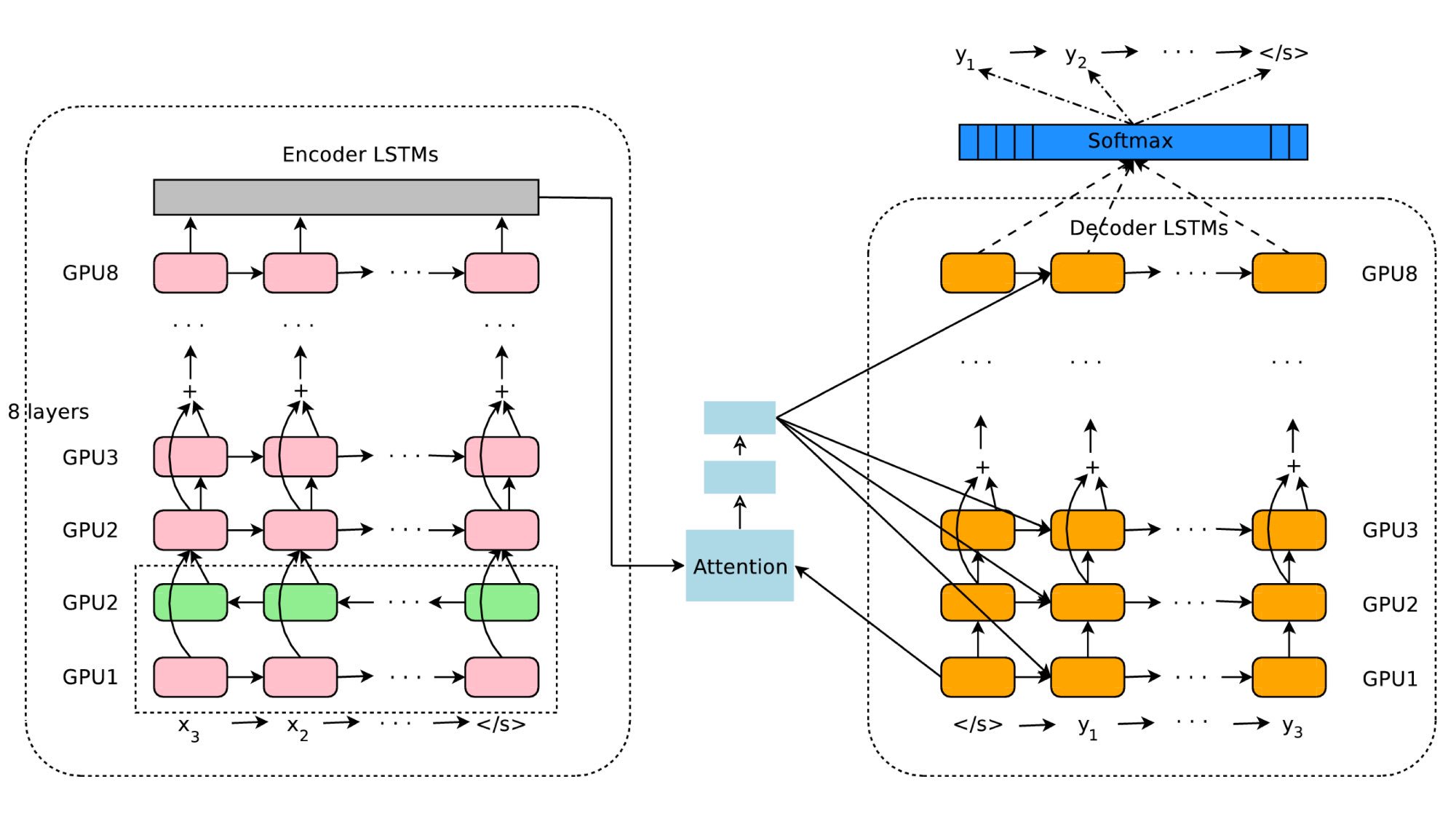
[R] How to Draw LSTM Architecture like Google Machine Translation?

Hello fellow people who are crazy enough to do machine learning,

I’m writing a research paper that involves stacked LSTMs and some other fun ML models. What’s the best way to draw my architecture like how the Google machine translation team did? http://fastml.com/images/deep_learning_diagrams/google_neural_machine_translation_system.jpg

Edit: If you’re going to downvote this, at least tell me why 🙂

submitted by /u/yuh5
[link] [comments]

[D] Topics for an at work Machine Learning program at a Finance company

Hello!

I’ve been tasked with designing a beginner’s program to Machine Learning at work. The target crowd is a bunch of QuantFin professionals – so pretty adept with Stats and Programming.

Again, the target is to get them familiarized with the math behind and rationale for various techniques – rather than teaching them to code out, let’s say a Random Forest from scratch.

The reason being that, in our line of work, it’s completely okay to use a package, and it’s okay if you’re not making significant improvements to the method in itself. It’s more about acclimatizing them to the various techniques out there, so that the next time they come across a problem, they have a fair idea of what direction they can look in. I’m looking at a 40 hour programme, that eventually gives them some understanding of the underlying math and common applications

What are some topics that this forum thinks should be a part of such an effort?

submitted by /u/mrehanms
[link] [comments]

[D] How to detect/prevent fatal implementation bugs?

When you have an idea and implement it in a program and you don’t get the high accuracy that you hoped for, it could be because the idea itself doesn’t work or the implementation has a bug. If the low accuracy is due to a bug but you conclude that the idea doesn’t work, you could be tragically missing an important research result.

One way to solve the problem is to implement the idea twice, preferably with two people working independently, and compare their results. If the results (prediction and accuracy metrics) are the same for the same input, you conclude that both implementations were made as intended. If not, then you have to make them agree, examining differences and fixing bugs along the way. However, different implementations are bound to make different assumptions about various details and have different output even if there are no bugs. Even different ways of using a PRNG results in different results. Generally, it’s a very labor-intensive painstaking process that can take even more time than the initial implementation itself.

Are there other, more efficient, ways to ward off implementation errors that could doom one’s research?

submitted by /u/Syncopat3d
[link] [comments]

[P] Neural Network Gradient Sonification

Heavily inspired by the recent post by /u/perone I developed a Keras callback that can easily be included during training for all you Keras users out there. During training the callback will convert the gradient norms of the network layers to a tone which can be saved along with the spectrogram of the audio after training is completed.

Additionally, I looped over a parameter space by varying the activation function, optimizer, and learning rate. Most notably, tweaking the activation function and optimizer produced quite interesting results.

submitted by /u/nnatlab
[link] [comments]