
Blog

Learn About Our Meetup

5000+ Members

MEETUPS

LEARN, CONNECT, SHARE

Join our meetup, learn, connect, share, and get to know your Toronto AI community. 

JOB POSTINGS

INDEED POSTINGS

Browse through the latest deep learning, ai, machine learning postings from Indeed for the GTA.

CONTACT

CONNECT WITH US

Are you looking to sponsor space, be a speaker, or volunteer, feel free to give us a shout.

Category: NVIDIA

NVIDIA CEO Ties AI-Driven Medical Advances to Data-Driven Leaps in Every Industry

Radiology. Autonomous vehicles. Supercomputing. The changes sweeping through all these fields are closely related. Just ask NVIDIA CEO Jensen Huang.

Speaking in Boston at the World Medical Innovation Forum to more than 1,800 of the world’s top medical professionals, Huang tied Monday’s news — that NVIDIA is collaborating with the American College of Radiology to bring AI to thousands of hospitals and imaging centers — to the changes sweeping through fields as diverse as autonomous vehicles and scientific research.

In a conversation with Keith Dryer, vice chairman of radiology at Massachusetts General Hospital, Huang asserted that data science — driven by a torrent of data, new algorithms and advances in computing power — is becoming a fourth pillar of scientific discovery, alongside theoretical work, experimentation and simulation.

Putting data science to work, however, will require enterprises of all kinds to learn how to handle data in new ways. In the case of radiology, the privacy of the data is too important, and the expertise is local,  Huang told the audience. “You want to put computing at the edge,” he said.

As a result, the collaboration between NVIDIA and the American College of Radiology promises to enable thousands of radiologists nationwide to use AI for diagnostic radiology in their own facilities, using their own data, to meet their own clinical needs.

Huang began the conversation by noting that the Turing Award, “the Nobel Prize of computing,” had just been given to the three researchers who kicked off today’s AI boom: Yoshua Bengio, Geoffrey Hinton and Yann LeCunn.

“The takeaway from that is that this is probably not a fad, that deep learning and this data-driven approach where software and the computer is writing software by itself, that this form of AI is going to have a profound impact,” Huang said.

Huang drew parallels between radiology and other industries putting AI to work, such as automotive, where Huang sees an enormous need for computing power in autonomous vehicles that can put multiple intelligences to work, in real time, as they travel through the world.

Similarly, in medicine, putting one — or more — AI models to work will only enhance the capabilities of the humans guiding these models.

These models can also guide those doing cutting-edge work at the frontiers of science, Huang said, citing Monday’s announcement that the Accelerating Therapeutics for Opportunities in Medicine, or ATOM, consortium will collaborate with NVIDIA to scale ATOM’s AI-driven drug discovery program.

The big idea: to pair data science with more traditional scientific methods, using neural networks to help “filter” through the large combination of possible molecules to decide which ones to simulate to find candidates for in vitro testing, Huang explained

Software Is automation, AI Is the Automation of Automation

Huang sees such techniques being used in all fields of human endeavor — from science to front-line healthcare and even to running a technology company. As part of that process, NVIDIA has built one of the world’s largest supercomputers, SATURNV, to support its own efforts to train

AI models with a broad array of capabilities. “We use this for designing chips, for improving our systems, for computer graphics,” Huang said.

Such techniques promise to revolutionize every field of human endeavor, Huang said, asserting that AI is “software that writes software,” and that software’s “fundamental purpose is automation.”

“AI therefore is the automation of automation,” Huang said. “And if we can harness the automation of automation, imagine what good we could do.”


The post NVIDIA CEO Ties AI-Driven Medical Advances to Data-Driven Leaps in Every Industry appeared first on The Official NVIDIA Blog.

Wasting Away: Winnow Slims Down Commercial Food Waste

Food is too valuable to waste.

But nearly $100 billion of it is thrown away in the hospitality sector every year.

When you’re catering for an unknown number of guests, you can’t afford to be underprepared. In many cases, this can lead kitchen staff to the other extreme — preparing too many meals. All of the extra, unused ingredients ultimately end up in the bin.

Winnow, a U.K.-based company, is using AI to take a bite out of food waste by empowering commercial kitchens to reduce the amount of food they dump.

AI for Reducing Food Waste

Around one-third of the food produced globally for human consumption is wasted every year. That amounts to a staggering 1.3 billion tonnes.

Winnow is helping professional chefs curb those numbers with its latest product, Winnow Vision, which automatically detects, identifies and measures food at the point it is thrown out.

The system involves a set of digital weighing scales on top of which sits a standard kitchen bin. Mounted above this is a camera and compute system containing an NVIDIA Jetson TX2 supercomputer on a module.

The module takes the images captured by the camera, as well as the weight recorded by the scales, and determines what is being thrown out and in what quantity. The neural networks used by the Jetson TX2 are trained using AWS instances with NVIDIA V100 GPUs on TensorFlow. To identify the wide variety of food the system may encounter, a huge amount of training data is needed — up to 1,000 images per food item.

The collected data is sent to the cloud for processing and regular reports are then created and shared with kitchen staff. The reports detail quantities and types of food being tossed, as well as recommendations as to how the kitchen can reduce waste.

Winnow co-founder and CEO Marc Zornes explains why the real-time deep learning results the Jetson TX2 delivers onsite — what’s known as “inference at the edge” — are key.

“It’s really important to us that the customer receives immediate results, in an environment that cannot guarantee a reliable and fast internet connection,” said Zornes. “Using the Jetson TX2 devices in the field enables us to provide, in real time, a ‘better than human’ understanding of what is being thrown into the bin on the edge, live, in the kitchen.”

The Jetson TX2 module can run multiple processes. Having a complete system on the edge means the Winnow team can reuse knowledge gained from working in the cloud and apply it to an edge paradigm. The Jetson platform is powerful enough to encompass current and future workloads, and flexible enough for Winnow to experiment and design new solutions.

Business Sense

Winnow Vision has already surpassed human levels with an accuracy rate of over 80 percent when identifying food that has ended up in the trash. This will increase with time as more and more data is collected.

The system is already installed in over 75 kitchens and Winnow plans to roll out the technology to thousands more in the coming years. IKEA and Emaar are among the companies that have implemented Winnow Vision in their kitchens.

Reducing the amount of food waste isn’t the only benefit for businesses. Automating the process increases efficiency in the kitchen, too. Staff require less training on food management and need to spend less time adjusting their menus.

Winnow has shown that by arming teams with analytics, food waste can be cut in half. The company estimates it has already helped commercial kitchens save more than $30 million in annualized food costs. That equates to preventing over 23 million meals from going in the trash.

With the advent of its new technology, Winnow has announced that it aims to save kitchens $1 billion by 2025.

The post Wasting Away: Winnow Slims Down Commercial Food Waste appeared first on The Official NVIDIA Blog.
SETI Phone Home: Harnessing AI in Search of Aliens

We’ve all read the science fiction, we’ve wondered about  suspicious objects in the sky, and we’ve even speculated over mysterious crop circles. But we still don’t know what’s out there.

Gerry Zhang, a graduate researcher at the Berkeley SETI Research Center, at the University of California, Berkeley, is working to detect signs of extraterrestrials through radio frequencies using AI.

“The idea is that if there are advanced civilizations out there, they could be sending us signals, either intentionally or unintentionally. And we could try to detect them,” said Zhang in a conversation with AI Podcast host Noah Kravitz.

The Berkeley SETI team collaborates with the Breakthrough Listen Initiative, a Breakthrough Initiatives program dedicated to searching for evidence of intelligent life across over 1 million stars and 100 galaxies. SETI stands for the search for extraterrestrial intelligence.

Taking data from radio telescopes, Zhang and his team create spectrograms, which are visual representations of a spectrum of frequencies in a sound or signal as it varies with time. According to Zhang, radio frequency data is ideal for interstellar communication as it’s transparent with a range of frequencies.

“[SETI] is an idea that other civilizations might have developed similar technology as ours. But in reality, we obviously don’t know for sure, right? So, one idea is to search for anomalous signals that looks different from anything on Earth. AI can certainly help with that.”

AI helps sort through the data collected from radio frequency transmissions, separating signals from the noise.

“On Earth, we make a lot of transmissions in radio frequency and …  [we can’t] immediately identify [the signals] to an unknown source,” said Zhang. “Part of the job that AI can do is help us sort through the signals and try to characterize them.”

Zhang also held a session at the 2019 GPU Technology Conference in San Jose, Calif., discussing Berkeley SETI and Breakthrough Listen’s work with AI. A recording of the talk will be available here starting May 1.

When asked about his career journey, Zhang credits “the universality of artificial intelligence” as the driving force behind his passion and work ethic.

“The same [AI] technique can be applied from camera images to generating voice to writing music to finding aliens.”

How to Tune in to the AI Podcast

Our AI Podcast is available through iTunesCastbox, DoggCatcher, Google Play MusicOvercastPlayerFMPodbayPodBean, Pocket Casts, PodCruncher, PodKicker, Stitcher, Soundcloud, and TuneIn.

If your favorite isn’t listed here, email us at aipodcast [at] nvidia [dot] com.

Featured image credit: NASA

The post SETI Phone Home: Harnessing AI in Search of Aliens appeared first on The Official NVIDIA Blog.
AI in the Sky Aids Feet on the Ground Spotting Human Rights Violations

In a traditional human rights investigation, researchers travel to a region, conduct interviews, visit crime scenes, examine court records, and collect hospital or autopsy records.

While that painstaking approach still constitutes a major part of Human Rights Watch’s work, the U.S.-based nonprofit is also exploring new technological methods — including AI — for its investigations, said Fred Abrahams, an associate director.

“It would be irresponsible of us not to do that,” Abrahams said in a talk attended by more than 100 people at last month’s GPU Technology Conference. “We must explore every opportunity we can to get the goods to report on these human rights violations.”

These new tools include remote sensing via satellite and drone data, analytics from public datasets, and investigations using videos and photos posted to social media. Remote sensing is essential in situations where researchers can’t access a conflict zone or closed country — a major issue for the human rights and humanitarian community.

“We can’t document it if we can’t get there,” said Josh Lyons, director of geospatial analysis at Human Rights Watch. “If the people are in hiding or they’re dead, there’s no way to document that case.”

To push this work forward, the nonprofit is partnering with Element AI, a global AI software provider cofounded in 2016 by deep learning pioneer Yoshua Bengio. The company has a team in London focused on building AI for social good.

In addition to using NVIDIA GPUs in Element AI’s data center, Human Rights Watch is using two NVIDIA DGX Stations, provided in 2018 by NVIDIA, to further their efforts.

“The hardware will allow us to make it work,” Abrahams said.

Where There’s Smoke

There are hundreds of satellites orbiting and observing the Earth. Aerial imagery can show geographic features, human settlements and forces like flood and fire. Comparing how a region looks at one moment in time compared to another can be critical for human rights investigations — but the influx of data is too vast for any individual to go through.

At GTC, Lyons shared how Human Rights Watch was able to use thermal data from environmental satellites to begin monitoring the outbreak of ethnic violence in Myanmar in 2017, just hours after the first reports of conflict. Combined with aerial images, the organization was able to detect a pattern of burned Rohingya villages across the region.

This digital evidence helped on-the-ground researchers corroborate the testimony of the Muslim minority community targeted by the authorities. By pinpointing the exact date and time that a village began burning, investigators could better quantify the scale of violence and begin to determine who the perpetrators were.

But it takes an expert eye — or a neural network — to tell the difference between smoke plumes and puffy white clouds.

“Most of the time, it’s my eyes that are doing the analysis,” Lyons said. “The DGX immediately gives us the ability to scale.”

A deployed deep learning model that analyzes satellite or social media data could one day identify potential human rights abuses automatically from text and images and alert Human Rights Watch and humanitarian agencies.

However, though the proliferation of satellites and social media has led to a massive amount of new data for human rights investigators to parse, there’s still little labeled data to train neural networks. Looking at a satellite image of a smoke plume, “I know it’s a crime,” Lyons said. “But how do I tell the computer it’s a crime?”

That’s where Element AI’s expertise in deep learning can help. “By essentially cloning Josh’s visual cortex, we can have a huge impact,” said Julien Cornebise, director of research at Element AI. The company has also partnered with Amnesty International.

Cornebise and his team have also worked with Amnesty International on two projects: one to build neural networks to detect burned villages in Sudan, and another to parse Twitter data to study online abuse against women.

Putting AI to Good Use

Human Rights Watch has been using the DGX Stations for photogrammetry, or converting 2D footage into 3D models, based on data collected from the nonprofit’s drones. The team is also developing and testing deep learning models to parse aerial imagery and social media data.

“We’re data rich and drowning in potential applications,” Lyons said. “The simple challenge is to prioritize.”

Potential uses include AI tools for processing archival footage dating back nearly 50 years, or making handwritten notes from Human Rights Watch investigators easier to translate or search.

These archives, particularly researchers’ notebooks, are “more or less locked in hard copy, paper form,” Lyons said. “Having such a system in place would be quite useful. It would give immeasurable value to future investigations.”

Having powerful deep learning systems onsite is also critical for Human Rights Watch to build AI tools analyzing sensitive datasets. For certain data such as forensic photographs or personal information, the organization is often not authorized to share the information with third parties — or host it on a remote server that falls under a specific geographic area or legal jurisprudence.

Lyons said, “The DGX Station hits that perfect sweet spot of being able to do large, robust data analysis in-house with sensitive data in a way that meets all of our legal and ethical privacy concerns.”

The above satellite image may look like clouds over a coastal community. However, an expert eye, or AI, can tell that the image shows smoke — revealing building fires in five villages in Myanmar’s Maungdaw township on the morning of September 15, 2017. Image courtesy of Human Rights Watch and Planet Labs Inc.

The post AI in the Sky Aids Feet on the Ground Spotting Human Rights Violations appeared first on The Official NVIDIA Blog.

Injecting AI into Healthcare: Medical Innovators Harness NVIDIA Tools for AI-Powered Future

More than 1,500 healthcare experts will converge next week in Boston for the World Medical Innovation Forum to discuss the impact of AI in clinical care, and hear talks by top names in biotech and pharma, U.S. cabinet secretaries and federal agency leaders — and NVIDIA founder and CEO Jensen Huang.

Huang will have a fireside chat with Keith Dreyer, vice chairman of radiology at Massachusetts General Hospital. They’ll be introduced by Cathy Minehan, chairman of the hospital’s board of trustees.

At last year’s event, Huang spoke about the potential of AI to change healthcare, calling data the vital “source code” for companies in the future. This time, he’ll share the latest results of NVIDIA’s innovation in healthcare with partners like Massachusetts General Hospital.

Worldwide, NVIDIA GPUs are powering AI applications to discover potential drug molecules, improve the consistency of mammogram assessments, and detect rare congenital heart defects. And this is just the start.

Across the healthcare industry, AI researchers and innovators rely on NVIDIA’s deep learning and accelerated computing for medicine.

Leading minds in medicine gathered for our GPU Technology Conference in San Jose last month, including attendees from five of the top seven radiology departments in the United States and four of the top five academic medical centers in the country.

Eric Topol, founder and director of the Scripps Research Translational Institute, spoke to a packed audience on the potential for deep learning to help healthcare institutions provide better, faster and cheaper care. NVIDIA and Scripps established in 2018 a center of excellence for AI in genomics and digital sensors.

Through more than 40 healthcare sessions and several booth exhibits, panels and lightning talks, the conference highlighted how AI and GPUs are used in every pillar of healthcare, from medical imaging and genomics to drug discovery and patient care.

And NVIDIA showcased Clara AI, a software toolkit built for radiologists. Containing more than a dozen state-of-the-art classification and segmentation models, Clara AI provides experts with time-saving AI-assisted annotation tools and transfer learning capabilities.

Radiologists, data scientists and developers can now gain access to two software development kits — the Clara Train SDK and Clara Deploy SDK, enabling AI-assisted workflows for medical imaging.

Attendees of WMIF can learn more about the Clara AI toolkit in a demo at the MGH & BWH Center for Clinical Data Science booth.

The post Injecting AI into Healthcare: Medical Innovators Harness NVIDIA Tools for AI-Powered Future appeared first on The Official NVIDIA Blog.

How AI Is Changing Medicine

Doctors and nurses stand at the front lines of our healthcare system, providing immediate care. But there’s an equally important universe of researchers working in parallel who are advancing the tools and knowledge clinicians can draw on to treat their patients.

These researchers are developing new drugs to solve as-yet incurable diseases, simulating biological organisms and structures to better understand how they work, and diving into genomic data to find genetic markers related to specific health conditions.

And, for an ever-growing number of applications, they’re doing so using AI and accelerated computing.

How AI Is Changing Drug Discovery

There are almost as many potential drug-like molecules as there are atoms in the observable universe. Pharmaceutical companies and researchers pour years of effort and billions of dollars into exploring this vast library of molecules to discover new treatments for diseases.

Scientists use their expertise to guess which drug molecules will be able to stop a particular ailment in its tracks. They traditionally focus on one disease at a time, performing research over many years. With AI, they can instead virtually model millions of molecules and screen hundreds of diseases at a time.

Deep learning can pick up on the biochemical laws that govern how a drug molecule will act in the body, helping researchers understand the potential side effects of a drug molecule — or even come up with new, synthetic molecules that could treat a disease.

University of Pittsburgh researcher David Koes is doing just that, using NVIDIA GPUs for molecular docking, the process of simulating how a drug candidate will bind to a target protein. His team developed a deep learning model that improved their prediction accuracy from 52 percent to 70 percent.

And Recursion Pharmaceuticals, a member of the NVIDIA Inception program, is using more than 100 GPUs to train its neural networks for drug discovery across several therapeutic areas, including hundreds of rare diseases that currently lack treatments.

Recursion’s deep learning models analyze microscopy images, determining whether a drug compound is effective at healing diseased cells. Using AI allows the company to screen hundreds of features from more than 10 million cells in a week.

How AI Is Changing Genomics

Another area of medicine where the size and complexity of data are staggering is genomics. Despite being a relatively young field, genomics is growing fast, with datasets doubling in size around every eight months.

Around a million whole human genomes have been sequenced worldwide, giving scientists an ocean of granular data that can be harnessed for precision medicine, immunotherapy and population studies. But once this data is collected, it’s computationally demanding to analyze.

Scripps Research Translational Institute is partnering with NVIDIA to build deep learning applications for more affordable genome sequencing and better mutation detection from genomic data. Startups, too, are harnessing GPUs to solve challenges in genomic analysis.

Just as GPUs solve graphics problems by processing many pixels independently, they can break genetic information into tiny, individual pieces that can be crunched separately and then strung back together, says Ankit Sethia, cofounder of Inception startup Parabricks.

The company is using an NVIDIA DGX-1 server to detect key markers and outliers in a sequenced genome — shrinking the time it takes from a couple days to under an hour.

How AI Is Changing Medical Research

Researchers in universities around the world are using AI and GPUs to simulate biological structures and diseases that we don’t yet fully understand.

In Australia, a team at Monash University is using a process called cryo-electron microscopy to develop high-resolution 3D models of molecules, a compute-intensive process that requires an NVIDIA GPU-powered supercomputer to run.

The researchers are using the technology to develop drugs that can combat superbugs, or drug-resistant bacteria.

In the U.S., Colorado State University researchers are simulating an enzyme found in the deadly dengue virus, which infects hundreds of millions of people each year. Using GPU-powered supercomputers at the San Diego Supercomputing Center, the team was able to discover new aspects of enzyme motion.

With increased precision, this work could lead to insights that stop diseases like dengue from spreading.

Deep learning can also be used to help researchers amass the source data they need to develop breakthrough healthcare applications. At NVIDIA, researchers are using generative adversarial networks, or GANs, to advance medical research by generating abnormal brain MRIs to train neural networks for medical imaging.

These synthetic MRIs can help solve a challenge developers in the medical community often face: a lack of balanced, reliable training data to train their deep learning models.

See the NVIDIA healthcare page for more.

The post How AI Is Changing Medicine appeared first on The Official NVIDIA Blog.

Finger on the Pulse: GTC Spotlights Startups Propelling AI in Healthcare

It can be hard to stay healthy in a convention center filled with thousands of people — unless, of course, you’re at the GPU Technology Conference, where healthcare players big and small are showcasing the latest innovations in AI and medicine.

GTC 2019, held last week in Silicon Valley, featured more than 40 healthcare sessions, four panels, several booth exhibits and a handful of meetups. More than a dozen healthcare startups from the NVIDIA Inception program were part of the packed lineup, with five delivering a series of lightning talks.

Share the Health: Inception Pavilion Features Demos, Booths, Meetups

One area of the GTC show floor was reserved for Inception startups, with nearly 50 setting up booths to show off their latest demos. An Inception Theater featured lightning talks, where crowds gathered to hear the companies give five-minute talks about their work.

In its booth, digital health startup DDH showed off its AI models for dental applications, full-body MRI screens, and disease diagnosis for Alzheimer’s and lung cancer. The company, a second-time GTC attendee, also had a poster accepted to this year’s poster session.

South Korean startup Lunit is using AI to provide better quantitative assessments of diseases from medical images, including mammograms and chest x-rays. The company’s goal is to reduce false positives, false negatives and unnecessary tests — particularly invasive ones like biopsies. In its GTC booth, Lunit demonstrated its latest chest x-ray AI.

InformAI CEO Jim Havelka speaks with a GTC attendee at the startup’s booth.

InformAI, a company developing AI-enabled 3D medical image classifiers and patient outcome predictors, showcased its sinus image classifier in the booth. Trained on NVIDIA V100 GPUs through the Microsoft Azure cloud platform and with an onsite NVIDIA DGX Station, the deep learning model can detect 23 medical conditions from 3D CT head scans.

Another Inception startup, doc.ai demonstrated its medical research platform that can run medical studies from a mobile phone. The company’s co-founder and CEO, Walter De Brouwer, spoke on a healthcare panel focused on “Healthcare in the AI Era: Innovating with Data and Its Implications.”

At the panel, De Brouwer discussed the trend of growing datasets in healthcare and addressed data privacy as one of the implications. Certain deep learning healthcare applications transfer data to the cloud, which increases concerns of privacy. Instead, he suggested, patients can be entrusted with their own data.

“You can store all your information on your smartphone, and you can do some local predictions. You don’t need Wi-Fi or the cloud, and it’s extremely fast,” he said.

Vyasa Analytics at Inception Showcase
The Inception Showcase featured presentations by eight top startups, including Vyasa Analytics (third from left).

“It’s our first GTC, but we’re looking forward to being here again many times over,” said Akshay Sharma, doc.ai’s chief technology officer. “As an Inception program member, this is an opportunity to showcase the AI we are building for medical research and learn from what others are doing in the space.”

And at an Inception Showcase held at the Fairmont Hotel in San Jose, eight of the hottest startups in the program presented in front of an audience that included investors, media and industry executives. Vyasa Analytics, which builds deep learning software for life sciences and healthcare companies, was one of the participants — all of which received an NVIDIA TITAN RTX GPU at the event.

GTC’s in Session: Startups Educate Attendees on Latest Innovations

For a deeper dive into their products and projects, a half-dozen Inception healthcare startups led sessions during the week. Subtle Medical CEO Enhao Gong spoke about data augmentation and GANs as tools to overcome the barrier of inadequate training data for medical imaging. Daniel Golden, director of machine learning at Arterys, led a session on neural networks used for volumetric assessment of liver lesions.

Another Inception startup, Innoplexus, gave two talks: one on GPU-powered applications for faster drug development, and another on parsing information from large, textual datasets in life sciences.

NE Scientific presented a session on how deep learning can be used for computerized surgical guidance in liver tumor ablation.

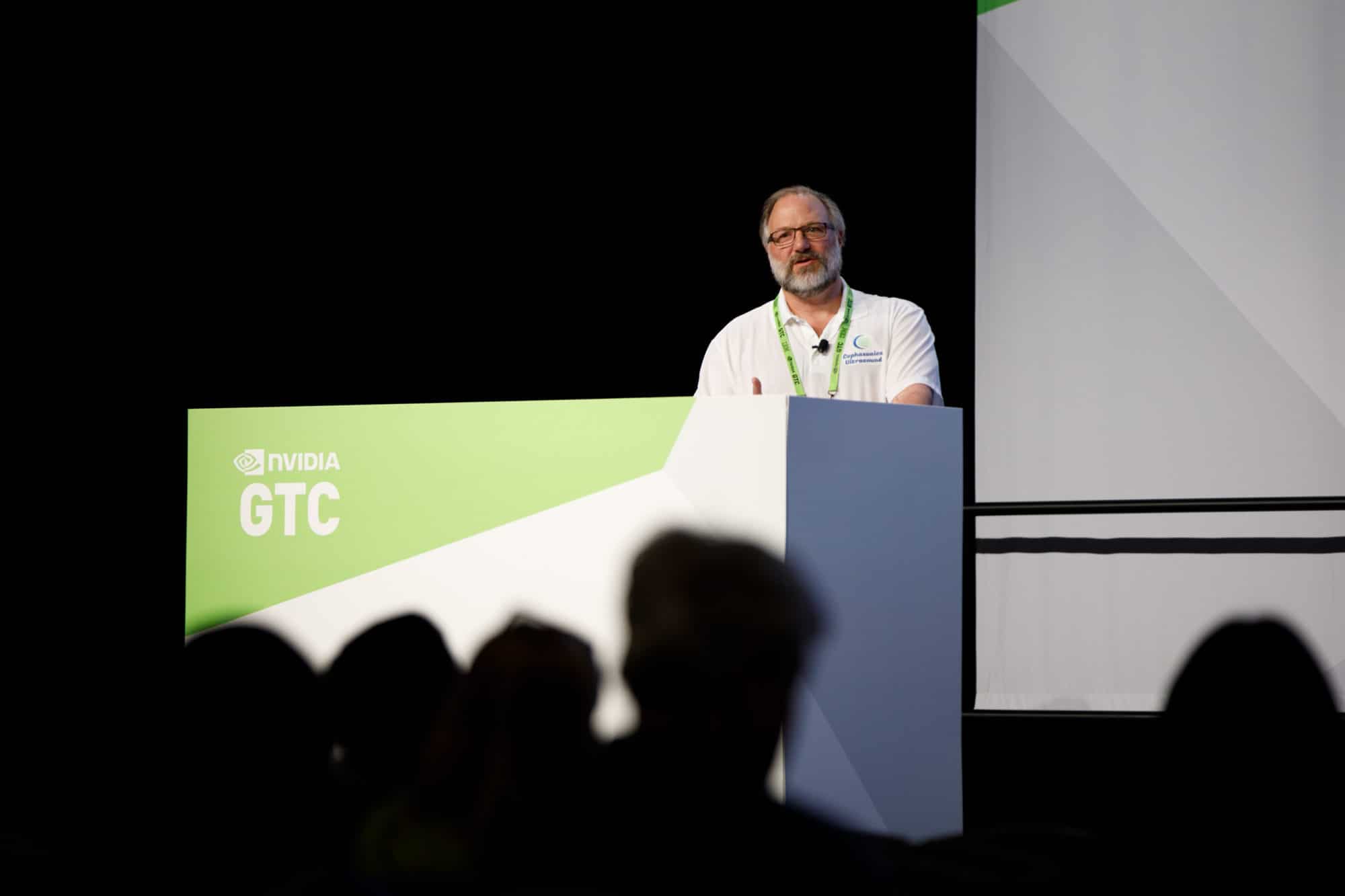
Richard Tobias, CEO of Santa Clara-based Cephasonics Ultrasound Solutions, spoke about the startup’s use of NVIDIA GPUs and the Jetson Xavier developer kit for powerful, AI-ready ultrasound hardware.

The vast majority of data collected during an ultrasound is thrown away before it can be stored and analyzed. But GPU-powered AI models can crunch that data and extract information that can help clinicians, he said. “We’ve got to move the math closer to the source.”

In a GTC session, Cephasonics CEO Richard Tobias spoke about the company’s use of NVIDIA GPUs to develop AI-enabled ultrasound solutions.

Unlike other medical imaging techniques, ultrasound is safe to be used in situations like surgery, where an AI model could help a surgeon gain visibility into an area of the body in real time before making an incision.

Cephasonics’ platform is used by Inception startup ImFusion, another GTC session presenter. Raphael Prevost, senior scientist at ImFusion, spoke about how deep learning algorithms can be used for ultrasound image enhancement, anatomy classification and 3D reconstruction of 2D video clips.

Medical Imaging Startups Accelerate Inference with T4 GPUs

NVIDIA T4 GPUs enable accelerated AI training and inference while using just 70 watts of power. These powerful GPUs are already being adopted into mainstream enterprise servers — and demonstrating their potential for medical imaging startups.

12 Sigma Technologies

San Diego-based startup 12 Sigma Technologies is using deep learning to examine lung CT scans, helping radiologists detect small, hard-to-spot lung nodules. Finding smaller malignant nodules can improve early detection of lung cancer, a condition that accounts for a quarter of all cancer deaths in the U.S. Using an NVIDIA T4 cluster, the company can run its lung cancer screening product 18x faster compared to using a CPU for inference.

InferVISION

InferVISION, one of China’s top medical imaging startups, is also focusing on lung nodule analysis and prediction from CT scans. When using T4 GPUs for inference, its team achieved speedups of around 4x over CPU. The startup’s product, InferRead CT Lung, automatically identifies and labels different types of lung nodules in under 30 seconds, which can help reduce radiologists’ workloads.

Subtle Medical

Silicon Valley-based Subtle Medical is developing a suite of medical imaging software applications powered by deep learning. Its first FDA-cleared product, Subtle PET, enhances scan images so clinicians can run up to 4x faster PET scans — improving patient comfort while speeding up the radiology workflow. Deployed on NVIDIA T4, SubtlePET inferencing is accelerated 3.5x over CPUs.

See the NVIDIA healthcare page for more.

The post Finger on the Pulse: GTC Spotlights Startups Propelling AI in Healthcare appeared first on The Official NVIDIA Blog.

JetBot, a $250 DIY Autonomous Robot Based on Jetson Nano Impresses at GTC

Even at a conference packed with sophisticated autonomous machines that walk, drive, fly and even slither, on their own, the $250 JetBot was a standout.

Based on the Jetson Nano, the small but mighty $99 AI computer introduced by NVIDIA CEO Jensen Huang at GTC last week, the JetBot drew a crowd of hundreds to a session where its creators explained how to build one of your own.

The bill of materials? Just $250, including the Jetson Nano. That includes a camera, motor and motor driver, and even a tiny PiOLED display.

Yet the dinky robot is capable. The Jetson Nano powering it supports high-resolution sensors, can process many sensors in parallel, and can even run modern neural networks on each sensor stream — giving the JetBot some amazing capabilities.

“With JetBot, you learn not only the training and deployment of deep learning models, but also how to collect a dataset,” said Chitoko Yato, the JetBot’s co-creator. “We run through the full workflow for teaching the robot to avoid collisions by labeling images captured using the onboard camera.”

Bot to You by Jetson Nano

The Jetson Nano that the JetBot is built around comes with out-of-the box support for full desktop Linux and is compatible with many popular peripherals and accessories. Its ready-to-use projects and tutorials help makers get started with AI fast. The small but powerful CUDA-X AI computer delivers 472 GFLOPS of compute performance. Yet it’s power efficient, consuming as little as 5 watts.

All the instructions to build the robot with Jetson Nano are shared on GitHub, so it’s easy to get started. Once you do, you’ll be able to enjoy education tutorials from basic motion to AI-based collision avoidance. And you can interactively control it all from your web browser.

At GTC, John Welsh, a JetBot co-creator, showed it off to hundreds of gawkers as it wound its way through a miniature Lego city.

“It’s all open source, the hardware, the software,” Welsh said. “Then you can take what you learned, take the components and you could build something new.”

Who knows where JetBot will take you.

The post JetBot, a $250 DIY Autonomous Robot Based on Jetson Nano Impresses at GTC appeared first on The Official NVIDIA Blog.

UK Government Aims to Tackle Insurance Fraud with AI

A bodybuilder, a cyclist and a student.

They didn’t walk into a bar. But they did raise some hair-raising fraudulent insurance claims.

In 2017, a cyclist claimed £135,000 compensation after he falsely stated that he fell off his bike following a collision with a pothole. A bodybuilder claimed £150,000 for a back injury that wasn’t hindering him from the press-up challenge he went on to film. And a student thought his luck was in when he tried to claim £14,000 for the “loss” of some of his more expensive personal items while on a jolly holiday in Venice.

Insurance fraud cases cost the U.K. billions of pounds every year. On average, it boils down to over £10,000 per fraudulent claim — and results in consumers having to spend an extra £50 per policy.

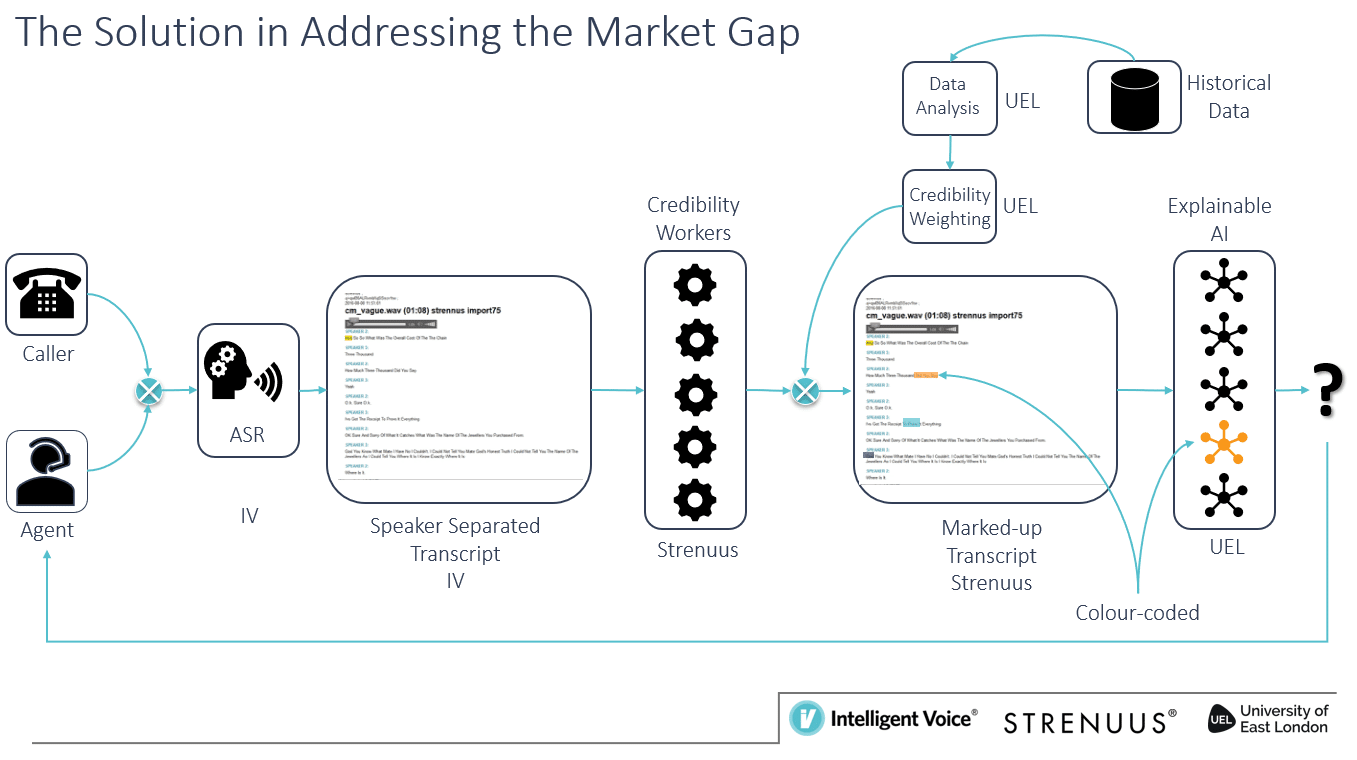
To drive these numbers down, Intelligent Voice, Strenuus and the University of East London are creating an AI and voice recognition technology that will help identify fraudulent claims.

Tackling the Big Issues

Insurance companies currently face two major challenges.

The first is the large number of calls they receive for fraudulent claims. The second is adapting to the recent GDPR law, which prohibits so-called black box policies. Instead, insurance companies have to be able to explain to their customers, as well as regulators, how decisions have been made.

In response, London-based Intelligent Voice has set out to develop a set of machine learning algorithms that can identify fraudulent behavior in real time. The goal is to make processes more efficient and effective, as well as reduce the fatigue experienced by call agents.

Intelligent Voice, Strenuus and the University of East London are using AI to tackle insurance fraud.

Intelligent Voice combines its machine learning and speech recognition skills with behavioral analytics knowledge from Strenuus, also based in London. The University of East London is working on adding an explainability layer to the technology that will determine how and when decisions were made in a particular case.

The team has shown that they can match human-level efforts in identifying potential fraud.

Their efforts are part of the U.K. government’s Next Generation Services Industrial Strategy Challenge Fund. The project will run for about two-and-a-half years.

Detecting Fraud Before the Payout

During calls to insurers, the system picks up signals of potential deception. These can take the form of specific words or phrases as well as tone of voice. A long short-term memory (LSTM) network has been trained to recognize the signals in real time, so call agents can respond to alerts immediately and change their responses accordingly.

Employee productivity gets a boost because calls flagged by the technology can be provided as a list noting potentially fraudulent markers. Call agents can jump directly to flagged sections for review.

Intelligent Voice’s machine learning algorithms are trained using hundreds of thousands of insurance calls, which have already been manually screened. To power this training, they use an assortment of NVIDIA GPUs and, in production, their software runs on NVIDIA Tensor Core V100 GPUs.

“From a technology perspective, we’ve not found anything which gives us the flexibility and performance that NVIDIA GPUs do,” said Nigel Cannings, CTO of Intelligent Voice. “The flexibility that CUDA offers, in particular, both on the programming side as well as supporting deep learning simultaneously, means that NVIDIA is the obvious choice for us.”

The post UK Government Aims to Tackle Insurance Fraud with AI appeared first on The Official NVIDIA Blog.

Betting on Monte Carlo: GPUs a ‘Game Changer’ for Nuking Noise in Nuclear Imaging

Andras Wirth is like many early AI researchers: His deep learning ambitions only turned into reality because of a sea change in technology.

A physicist, Wirth wanted to run Monte Carlo algorithms to make leaping advances in nuclear imaging, which was previously computationally impossible without massive supercomputers.

A decade ago, his breakthrough came when his lab began using GPUs and the first CUDA release on the computationally demanding algorithms.

On Thursday at the GPU Technology Conference in Silicon Valley, Wirth, who leads nuclear imaging at Mediso Medical, spoke about his company’s groundbreaking work.

Wirth’s team of CUDA programmers runs Monte Carlo method transport calculations on GPUs to enhance image quality. This helps to eliminate the usual degenerating effects that come from inaccuracies in physical modeling.

Monte Carlo transport methods rely on modeling the physical processes that contribute to acquiring the image of a patient. For maximum precision, the modeling consists of simulating billions of photon tracks. These photon tracks are random by nature, thus the simulation itself has to be random —  just like the games in the city of Monte Carlo.

Besides improving the image quality of scans, the main issue for nuclear medicine is the need to lower the dose of injected radioactive isotopes without impairing the diagnostic value of the acquired images. Neural networks help cope with the increasing noise level while also maintaining the useful information with a performance that is unrivaled by  conventional methods.

The lowered dosages are a boon to patients and the facilities that administer the radioactive substances, and the GPU-accelerated technique behind it holds great promise across the field.

“This is a complete game changer — it can have an effect on every type of nuclear medical procedure,” Wirth said.

Los Alamos to Budapest

The Monte Carlo method dates back to research at the Manhattan Project in the 1940s. But it wasn’t until recently that researchers and engineers applied GPUs to the computationally demanding algorithms.

Wirth’s work with GPUs on Monte Carlo methods have added to the capabilities of Budapest-based Mediso’s software used in its cameras for SPECT scans. SPECT (single-photon emission computerized tomography) scans rely on radioisotopes that are injected into the bloodstream of patients. Clinicians then use specialized cameras to capture 3D images of organs.

Mediso trained its U-Net convolutional neural network architecture on 1,000 images of bone scans. U-nets are used in medical imaging to bolster image segmentation so that different areas of details can be outlined.

It took a lot of computing power to do these types of calculations, Wirth said. “Traditionally, only supercomputers were able to do these type of calculations,” he said. “Until, GPUs appeared for general computing, it didn’t even make sense to try out Monte Carlo particle transport calculations in medical imaging.”

GPUs Lower Dose

Radioisotopes administered in medical imaging are low-level carcinogens for patients, expensive for imaging facilities to obtain and require special handling.

“Nobody likes to have nuclear isotopes in their body. That’s why we want to minimize the dose injected to the body — there are risks,” said Wirth.

However, when you lower a radioisotope dose, those lines are more difficult to decipher and blurring occurs that makes it difficult to spot lesions in bones.

Mediso used its neural network solutions running on GPUs to help to minimize that imaging “noise” while reducing the radioisotope dose administered to patients by one-eighth.

“It’s hard to imagine developing neural network-based products without the help of GPUs nowadays. It doesn’t stop there, however: since processing time is crucial in medical imaging, GPU technology has become a vital element of imaging products,” Wirth said.

The post Betting on Monte Carlo: GPUs a ‘Game Changer’ for Nuking Noise in Nuclear Imaging appeared first on The Official NVIDIA Blog.