Blog

Learn About Our Meetup

5000+ Members

MEETUPS

LEARN, CONNECT, SHARE

Join our meetup, learn, connect, share, and get to know your Toronto AI community. 

JOB POSTINGS

INDEED POSTINGS

Browse through the latest deep learning, ai, machine learning postings from Indeed for the GTA.

CONTACT

CONNECT WITH US

Are you looking to sponsor space, be a speaker, or volunteer, feel free to give us a shout.

Author: torontoai

[Project] GLTR: A tool to detect automatically generated text

[Project] GLTR: A tool to detect automatically generated text

Came across this tool GLTR that allows you to detect text that was automatically generated from large language models – http://gltr.io/

They have live demos here. Pretty interesting!

“We can see that there is not a single purple word and only a few red words throughout the text. Most words are green or yellow, which is a strong indicator that this is a generated text.”

https://i.redd.it/y9mzbg3f27y21.png

submitted by /u/ceceshao1
[link] [comments]

[P] PyTorch-backed, research-friendly RL baselines

[P] PyTorch-backed, research-friendly RL baselines

We are exciting to have a stable release of a set of RL baselines with PyTorch, that is designed to be research-friendly e.g. compact, clean, easy-to-read, easy-to-modify.

https://github.com/zuoxingdong/lagom/tree/master/baselines

For now it covers following baselines:

ES: CEM/CMA-ES/OpenAI-ES

RL: VPG/PPO/DDPG/TD3/SAC (with automatic temperature tuning)

https://i.redd.it/9d4oiq88z6y21.png

https://i.redd.it/t8u415f5z6y21.png

submitted by /u/metaAI
[link] [comments]

[D] Convolutional neural network width and depth vocabulary convention.

Hi,

As far as I’m aware of, vocabulary is not normalized at all across research. I tend to use depth for the number of consecutive convolution, and width for the number of filter used at each convolutional layer. Though, its tricky when considering the tensor shape, where height and width are used to describe the feature map, and depth corresponds to the number of filter.

Which convention do you use and which seems the more widespread ? Thank you.

submitted by /u/Towram
[link] [comments]

Sprint Data Science Interview Questions

Sprint had more than 55 million customers at the end of 2013.

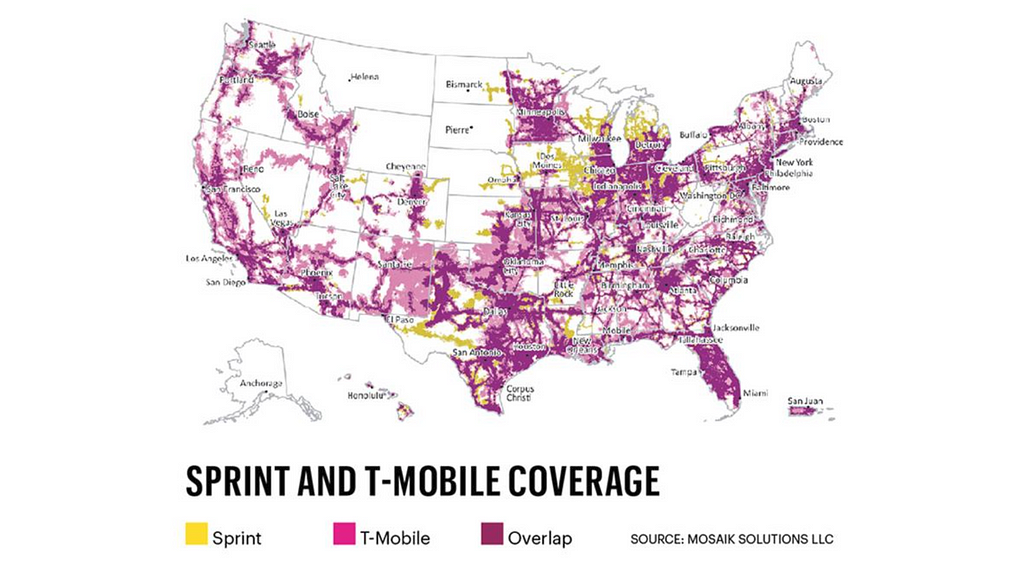
Sprint Corporation headquarters are located in Overland Park, Kansas. The company is widely recognized for developing, engineering and deploying innovative technologies, including the first wireless 4G service from a national carrier in the United States. The American Customer Satisfaction Index rated Sprint as the most improved company in customer satisfaction, across all 47 industries, during the last five years. The merger of T-Mobile and Sprint, the third- and fourth-largest carriers in the U.S happened in 2018. The combined company would have more than 126 million customers. One cannot imagine the amount of data that resides within a telecom company let alone two companies after merging. Sprint established subsidiary Pinsight Media to investigate ways of capitalizing on that data. Since then it has gone from serving zero to six billion ad impressions per month, based on “authenticated first party data” which it alone has access to. This kind of data is a huge advantage for any Data Scientist and provide a tremendous potential to grow their career.

Source: Bizjournal

Interview Process

The interview process with an HR interview. The next interview is a take home ML and Coding assessment. The assessment is statistics heavy and requires in depth knowledge about probability distributions and ML Algorithms. The assessment is followed a case study around predictions. The case study provides a problem statement and requires to come up with predictions based on the dataset provided in the case study. The case study is followed by the technical interview and finally a hiring manager interview. The interview process is intense consisting of five rounds but the company is well worth it.

Important Reading

Source: Slideshare

Data Science Related Interview Questions

  • Describe Ridge and Lasso Regression.
  • Explain SVMs and how they could be used in telecom.
  • What are the differences between RDBMS and NoSQL?
  • What are the different Data Structures used in Spark?
  • Which Data Structure is apt for Geolocation Analysis?
  • What is standard deviation? Why do we need it?
  • Given n samples from a uniform distribution[0,d]. How do you estimate d?
  • In an A/B test, how can you check if assignment to the various buckets was truly random?
  • How do you optimize model parameters during model building?
  • How does regularization reduce over fitting?

Reflecting on the Questions

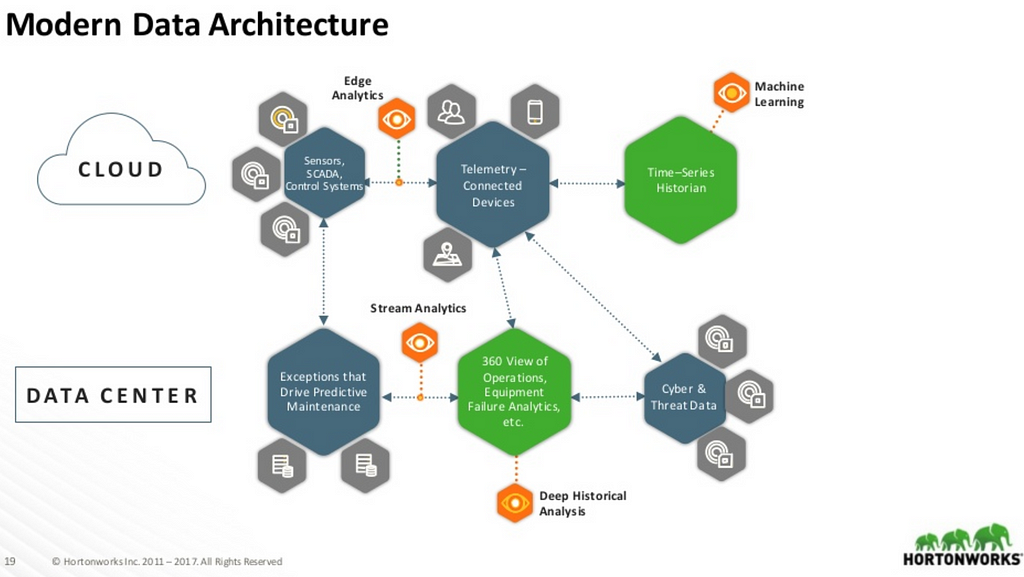
The data science team at Sprint which is now merged with T-Mobile has some of the best data sets in the world. Their stack is hadoop and spark based. Their questions reflect the kind of work they do where data insights could be employed for ads. A decent knowledge of how ML can be applied to Telecom can surely land you a job with one of the world’s largest Telecom giant!

Subscribe to our Acing AI newsletter, I promise not to spam and its FREE!

Acing AI Newsletter – Revue

Thanks for reading! 😊 If you enjoyed it, test how many times can you hit 👏 in 5 seconds. It’s great cardio for your fingers AND will help other people see the story.

The sole motivation of this blog article is to learn about Sprint and its technologies helping people to get into it. All data is sourced from online public sources. I aim to make this a living document, so any updates and suggested changes can always be included. Please provide relevant feedback.


Sprint Data Science Interview Questions was originally published in Acing AI on Medium, where people are continuing the conversation by highlighting and responding to this story.

[D] What is the difference between few-, one- and zero-shot learning?

At first, I’ve thought that:

– few-shot learning is when there is only few training examples for each label available;

– one-shot learning is when there might be only one training example for a label;

– zero-shot learning is when some labels won’t be available in training sample.

But, for example, in Siamese Neural Networks for One-shot Image Recognition training process requires more than one training example for label in set, which would be few-shot learning, and in the test time you can choose the class which was not represented, which would be zero-shot learning.

It confuses me and I will greatly appreciate if someone helps me.

submitted by /u/FeatherNox839
[link] [comments]

[Discussion] What hardware and computational time is reasonable for training GPT 117M parameter model from scratch?

I see that a replica of 40GB WebText has been released. I am wondering how long it would take to train the smallest GPT model on this from scratch. I havent done much training of such large datasets which is why I am asking. Hopefully someone with some experience can help me.

Would it be reasonable for an individual to do this on Google Cloud platform with the £250 credits?

submitted by /u/MrKreeps
[link] [comments]

Bird’s-AI View: Harnessing Drones to Improve Traffic Flow

Traffic. It’s one of the most commonly cited frustrations across the globe.

It consumed nearly 180 hours of productive time for the average U.K. driver last year. German drivers lost an average of 120 hours. U.S. drivers lost nearly 100 hours.

Because time is too precious to waste, RCE Systems — a Brno, Czech Republic-based startup and member of the NVIDIA Inception program — is taking its tech to the air to improve traffic flow.

Its DataFromSky platform combines trajectory analysis, computer vision and drones to ease congestion and improve road safety.

AI in the Sky

Traffic analysis has traditionally been based on video footage from fixed cameras, mounted at specific points along roads and highways.

This can severely limit the analysis of traffic which is, by nature, constantly moving and changing.

Capturing video from a bird’s-eye perspective via drones allows RCE Systems to gain deeper insights into traffic.

Beyond monitoring objects captured on video, the DataFromSky platform interprets movements using AI to provide highly accurate telemetric data about every object in the traffic flow.

RCE Systems trains its deep neural networks using thousands of hours of video footage from around the globe, shot in various weather conditions. The training takes place on NVIDIA GPUs using Caffe and TensorFlow.

These specialized neural networks can then recognize objects of interest and continually track them in video footage.

The data captured via this AI process is used in numerous research projects, enabling deeper analysis of object interaction and new behavioral models of drivers in specific traffic situations.

Ultimately, this kind of data will also be crucial for the development of autonomous vehicles.

Driving Impact

The DataFromSky platform is still in its early days, but its impact is already widespread.

RCE Systems is working on a system for analyzing safety at intersections, based on driver behavior. This includes detecting situations where accidents were narrowly avoided and then determining root causes.

By understanding these situations better, their occurrence can be avoided — making traffic flow easier and preventing vehicle damage as well as potential loss of life.

Toyota Europe used RCE Systems’ findings from the DataFromSky platform to create probabilistic models of driver behavior as well as deeper analysis of interactions with roundabouts.

Leidos used insights gathered by RCE Systems to calibrate traffic simulation models as part of its projects to examine narrowing freeway lanes and shoulders in Dallas, Seattle, San Antonio and Honolulu.

And the value of RCE Systems’ analysis is not limited to vehicles. The Technical University of Munich has used it to perform a behavioral study of cyclists and pedestrians.

Moving On

RCE Systems is looking to move to NVIDIA Jetson AGX Xavier in the future to accelerate their AI at the edge solution. They are currently developing a “monitoring drone” capable of evaluating image data in flight, in real time.

It could one day replace a police helicopter during high-speed chases or act as a mobile surveillance system for property protection.

The post Bird’s-AI View: Harnessing Drones to Improve Traffic Flow appeared first on The Official NVIDIA Blog.

[D] Let’s say someone gives you a big, challenging, labeled dataset to train a model on. How do you tell the labels aren’t random for the most part and putting energy into training a model isn’t a waste of time?

The data could be any kind of data, but it requires an expert to annotate it correctly, and since you’re not an expert in that particular area, you can’t eye-check if the labels make sense. You also try some baseline attempts that can overfit the training data but fail hard on every validation split. How to tell at this point whether the problem is just really challenging or whether the data’s labels are bad/wrong/random?

submitted by /u/DeepDeeperRIPgradien
[link] [comments]