Blog

Learn About Our Meetup

5000+ Members

MEETUPS

LEARN, CONNECT, SHARE

Join our meetup, learn, connect, share, and get to know your Toronto AI community. 

JOB POSTINGS

INDEED POSTINGS

Browse through the latest deep learning, ai, machine learning postings from Indeed for the GTA.

CONTACT

CONNECT WITH US

Are you looking to sponsor space, be a speaker, or volunteer, feel free to give us a shout.

Author: torontoai

[R] (Replicating) Modern Neural Networks Generalize on Small Data Sets

I have stumbled across the NIPS paper from Olson, Wyner and Berk on decomposing deep neural networks into decorrelated sub-networks to explain how neural networks generalise well (as de facto ensembles) also on small data sets.

Since I am trying to get more acquainted with tensorflow and pytorch, I tried to implement the decomposition strategy presented, however, am running into some issues obtaining convergence results similar to the ones presented in the paper. I am new to this subreddit and hope that maybe someone could point me to issues in my replication efforts.

The authors use the following network architectures they subsequently decompose into subnetworks via linear programming:

– 10 hidden layers (with elu activation and he initialization) with 100 each

– binary classification task

– Adam optimizer with learning rated of 0.001 and 200 training epochs

I am using the following code to simulate data similar to the synthetic data set used in the paper:

np.random.seed(0)

def classify(x):

if np.linalg.norm(x) < 0.6: # the paper mentions a radius of 0.3, the images look like 0.6 though

return 1

else:

return 1 if np.random.random() < 0.15 else 0

x_ = np.linspace(-1, 1, 20)

X_train = np.asarray([(x_[i], x_[j]) for i in range(20) for j in range(20)], dtype=np.float32)

y_train = np.apply_along_axis(classify, 1, X_train).reshape(400, 1)

Then I have set up the network architecture as follows:

X_input = tf.placeholder(tf.float32, [None, 2], name='input_data')

y = tf.placeholder(tf.float32, [None, 1])

X = tf.layers.dense(X_input, units=M, kernel_initializer=tf.contrib.layers.variance_scaling_initializer(), activation=tf.nn.elu, name='dense_0')

for i in range(1, L):

X = tf.layers.dense(X, units=M, kernel_initializer=tf.contrib.layers.variance_scaling_initializer(), activation=tf.nn.elu, name='dense_' + str(int(i)))

logits = tf.layers.dense(X, units=1, activation=None, name='logits')

predicted = tf.nn.sigmoid(logits, name='predicted')

is_correct = tf.equal(tf.round(predicted), y, name='is_prediction_correct')

accuracy = tf.reduce_mean(tf.cast(is_correct, tf.float32))

cross_entropy = tf.nn.sigmoid_cross_entropy_with_logits(labels=y, logits=logits)

l = tf.reduce_mean(cross_entropy)

optimizer = tf.train.AdamOptimizer(learning_rate=0.001).minimize(l)

To my understanding this should match the implementation details of the paper, however, while the paper limits the training epochs to 200 and even mentions, that

In practice, we found that networks without dropout achieved 100% training accuracy after a couple dozen epochs of training.”

my implementation only converges after 500+ epochs at best.

Does anyone here have ideas about what I could be doing wrong?

submitted by /u/biopsi
[link] [comments]

What is AUC?

Data Science Interview Questions based on AUC.

Few weeks ago, I started wrote about ROC curves. The purpose was to provide a basic primer on ROC curves. As a follow up, this article talks about AUC.

Photo by Zbysiu Rodak on Unsplash

AUC stands for Area Under the Curve. ROC can be quantified using AUC. The way it is done is to see how much area has been covered by the ROC curve. If we obtain a perfect classifier, then the AUC score is 1.0. If the classifier is random in its guesses, then the AUC score is 0.5. In the real world, we don’t expect an AUC score of 1.0, but if the AUC score for the classifier is in the range of 0.6 to 0.9, then it is considered to be a good classifier.

AUC for the ROC curve

In the preceding figure, the area under the curve which has been covered becomes our AUC score. This gives us an indication of how good or bad our classifier is performing. ROC and AUC are the two indicators that can provide us with insights on how our classifier performs.

Subscribe to our Acing AI newsletter, I promise not to spam and its FREE!

Acing AI Newsletter – Revue

Thanks for reading! 😊 If you enjoyed it, test how many times can you hit 👏 in 5 seconds. It’s great cardio for your fingers AND will help other people see the story.

Reference: ML Solutions


What is AUC? was originally published in Acing AI on Medium, where people are continuing the conversation by highlighting and responding to this story.

[D] Is there a well maintained list of good “benchmark” datasets for ML ?

I’m looking for up to date datasets to benchmark various algorithms against the performance (both speed and accuracy) of published models.

I’ve found some dataset but the main issue is that they are either:

a) very old and small, e.g. most datasets hosted by UCI, which are rather “easy” to “solve” nowadays and most papers using them came out decades ago. Even barring that, a lot of the papers dealing with the data are not ideal for benchmarks per-say because they are not very specific in their methodology for splitting into train/test/validate.

OR

b) They are focused on images, e.g. cifrar 100 is pretty decent, and there are loads of high quality models with known accuracy and available source code… but, I can’t find the equivalent of cifrar 100 for, say, financial timeseries prediction, or STT, or geospatial movement predictions for cars… or any problem other than image classification -_-

Are there any well maintained list of datasets that specifically have various models benchmarked against them ? Or would it be better to just do reverse-search on this problem, as in, look for interesting papers that came out in the last few years and use the datasets they used.

submitted by /u/elcric_krej
[link] [comments]

[D] What is a good Data Science blog to publish in, a blog/online publication that is taken seriously by the DS community?

I have some thoughts I’d like to share on some of the challenges I face in my day in day out work.

No, I won’t be writing another “Gentle Introduction/ blah, blah, demystified” type post, but what I feel will be some serious and original insights into my particular corner of the ML/DS world.

What is a good blog or online publication that would accept my posts. I am OK with a review process, but one time I had to wait for 4 months before my post was reviewed and published (almost as long as an academic paper…), so I’m hoping a place that would publish the posts relatively quickly.

Any suggestions? Please do not say Towardsdatacience, the quality of that blog has plummeted in the last year.

submitted by /u/AlexSnakeKing
[link] [comments]

[R] Mental Simulation with Self-Supervised Spatiotemporal Learning

Hi all, I’d like to share my undergraduate thesis on Mental Simulation with Self-Supervised Spatiotemporal Learning. We propose that one way to understand mental simulation in humans is to approach it as a problem of video prediction. The code is based off the recent ICLR 2019 paper Eidetic 3D LSTM: A Model for Video Prediction and Beyond.

Paper: https://github.com/kevinstan/video_prediction/blob/master/paper/mental_sim.pdf

Code: https://github.com/kevinstan/video_prediction

Abstract: Mental simulation — the capacity to imagine objects and scenes in order to make decisions, predictions, and inferences about the world — is a key feature of human cognition. Evidence from behavioral studies suggest that representations of visual imagery are spatial and sensitive to the causal structure of the world. Inspired by how humans anticipate future scenes, we aim to leverage state-of-the-art techniques in deep learning and computer vision to tackle the problem of spatiotemporal predictive learning in a self-supervised manner. We perform explorations across three architectural design choices: (i) the importance of 2D-convolution vs. 3D-convolution inside the cell of recurrent neural networks, (ii) the effectiveness of residual connections in stacked long short-term memory models for remembering spatial information over long time horizons, and (iii) the balance between $l_1$ norm and $l_2$ norm components in the objective function. Our extensive evaluations demonstrate that finetuning with residual connections achieves state-of-the-art performance on the Moving MNIST and KTH Action benchmark datasets. Potential application areas include weather forecasting, traffic flow prediction, and physical interaction simulation.

Comments and feedback are highly appreciated. Thanks!

submitted by /u/computeisallyouneed
[link] [comments]

Expedia Data Science Interview Questions

There are 37 million Expedia members across 32 countries.

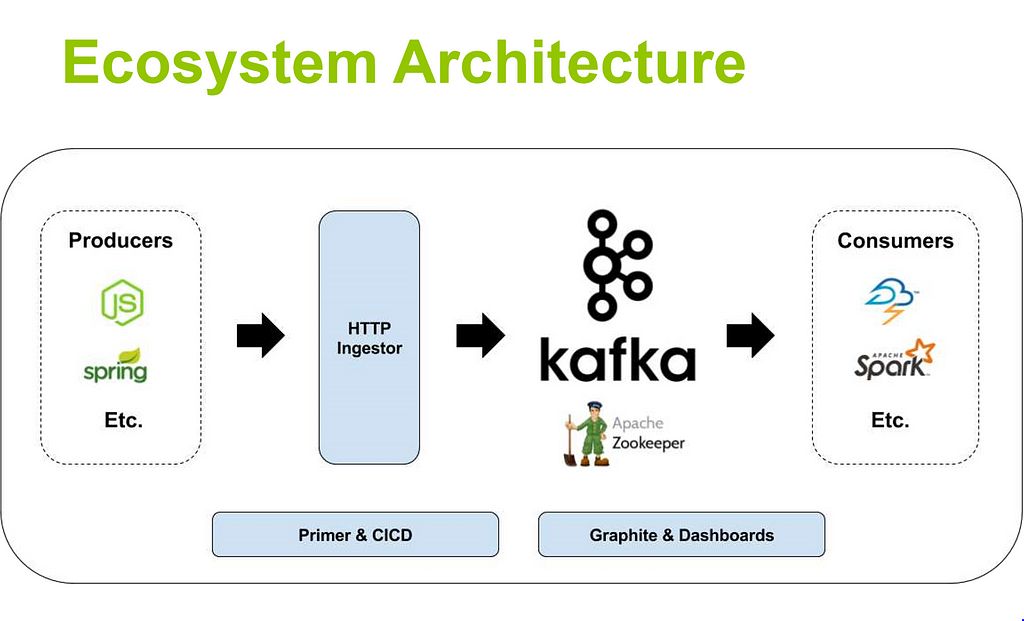
Expedia has covered 534 billion miles in air travel, this is enough for 72 round trips (in passenger miles flown) from the sun to Pluto and back. Expedia is a travel company like Booking.com which we have covered at Acing AI previously. It has sold enough hotel room nights in the last 20 years to account for every person living in the United States. The amount of data Expedia accumulates by having so many travellers every year leads to huge investment in technology. Expedia has invested over $850M trailing year over year in tech spend. A mature tech stack helps Data Scientists at their job. This is a great opportunity for any Data Scientist to build their career.

Photo by Vincent Versluis on Unsplash

Interview Process

If you are short-listed after resume screening, there is first interview with the manager of the data science team. These include technical questions about machine learning and statistics. After clearing that, there is a technical coding interview. The third round is an interview with HR more classic and typical job interview.

Important Reading

Source: Streaming Data Ecosystems

Data Science Related Interview Questions

  • What is the process of cross validation?
  • How can we do price optimization for properties on Expedia?
  • Predict Hotel prices in a given dataset.
  • Explain a Machine Learning project on your resume.
  • Develop a recommendation system based on a provided dataset.
  • Which flight path is more profitable for London-Lisbon or London-Milan?
  • Should we invest on buying more property in X city?
  • Explain linear and logistic regression.
  • Give pros and cons of SVM.
  • Explain the meaning of overfitting to non technical people.

Reflecting on the Question

The data science team at Expedia is geographically dispersed. The technical team has build a very mature data science architecture that enables the Data Science team. The questions are based on the questions the data science team at Expedia answers day to day. Great product sense about the Expedia product and its business can surely land you a job at one of the world’s largest travel sites!

Subscribe to our Acing AI newsletter, I promise not to spam and its FREE!

Acing AI Newsletter – Revue

Thanks for reading! 😊 If you enjoyed it, test how many times can you hit 👏 in 5 seconds. It’s great cardio for your fingers AND will help other people see the story.

The sole motivation of this blog article is to learn about Expedia and its technologies helping people to get into it. All data is sourced from online public sources. I aim to make this a living document, so any updates and suggested changes can always be included. Please provide relevant feedback.


Expedia Data Science Interview Questions was originally published in Acing AI on Medium, where people are continuing the conversation by highlighting and responding to this story.

[P] How to easily deploy XGBoost models in C++ production environments

Hi all!

I want to wish you a good evening and would like to share with you some tool I developed for my work in the particle physics community.

Probably we are not the only ones who like to prototype and train ML models with xgboost in Python and then have to deploy them to our high performance multithreading C++ production environment. This is exactly the step that my tool which I call “FastForest” wants to make easy like a breeze!

The mission of the library is to be:

  • Easy: deploying your xgboost model should be as painless as it can be
  • Fast: thanks to efficient structure-of-array data structures for storing the trees, this library goes very easy on your CPU and memory
  • Safe: the FastForest objects are immutable, and therefore they are an excellent choice in multithreading environments
  • Portable: FastForest has no dependency other than the C++ standard library

I hope that this might be of use for someone else too 🙂 I think it might, because so far, the only solutions to this C++ deployment problem that I found on the web are either to use the sparsely documented xgboost C API or to transform your models into hardcoded C++ (which is cool as well of course). What I tried to write here is a very lightweight and clean C++ solution which can load models dynamically.

Check it out here: https://github.com/guitargeek/XGBoost-FastForest

submitted by /u/jonas_aka_guitargeek
[link] [comments]