For my master thesis, my goal is to perform a speech emotion recognition task in a continuous space where I try to predict the dimensional values(valence, arousal, dominance) of emotion classes. I extract the features for each frame of the wav files in order to avoid non-stationary nature of the speech signals. Since the feature vector for each example needs to have the same shape as the input of the model, I investigate the number of frames for each audio file and found that the number of frames range between 32 and 1364. I know one solution for having equal sized feature vectors is to pad zero values until every vector have the maximum length which is 1364. So I have two questions regarding the construction of the feature vectors;
Does adding too many zeros(increasing the sparsity of the vector) have a negative effect on the performance of the features? If yes, can I tackle this by calculating the statistical functions(min, max, std, mean etc.) of the each feature vector? Or is there any other solution rather than padding zeros?
Some of the features in my case are extracted not from a frame but from the whole utterance like the duration of the utterance or the emotion class of the instance. What should be my approach for these features? Are there any downsides of considering them just like the other features with only 1 frame and to pad 1364-1 zero values to those vectors?
Have you ever seen or used Google Smart Reply? It’s a service that provides automatic reply suggestions for user messages.
This is a useful application of the retrieval based chatbot. Think about it. How many times do we text a message like thx, hey, or see you later? In this project, we build a simple message reply suggestion system.
Has anyone gone through the interview process at DeepMind? I found a couple of threads on reddit that vaguely mention it but they are mostly several years old and not very detailed.
I have a first quiz interview coming up with them and would really appreciate any information on what to expect, especially since I don’t know anyone working there and am from a somewhat tangential field myself.
PS: I realize my username is not the most appropriate 😀
I’d like to tell you about our recent paper. We’ve tackled the problem of a few-shot generation of talking heads: given a few (or even a single) image, train a model that is able to synthesize new images of that particular person with a new pose (viewpoint and expression).
Our model was trained on a publicly available dataset of YouTube videos (VoxCeleb2, 224p) and avoided mode collapse, even though the quality of images here is quite diverse. Hense, we’re able to generalize well for new images with identities unseen during training (we can even run it for paintings and get reasonable results).
The key ingredients are adversarial meta-learning, adversarial fine-tuning and adaptive instance normalization, for more details please refer to the paper, short description of our method as well as the results are in the video below.
Google has released AutoML service for structured datasets (AutoML Tables, currently in Beta). I’ve compared my open-source AutoML python package mljar-supervised with Google AutoML Tables on 6 datasets from openml.org. The results of Google AutoML Tables are poor (I was using 1-hour training). I think that the reason for poor results is a short training time. I think that the 1-hour of training on 92 machines in parallel is not enough for Google optimization algorithm. I believe they are using some Neural Architecture Search algorithm which is not very efficient. Maybe training for a longer time will give better results but the cost of 1-hour training is ~20USD so it can easily skyrocket.
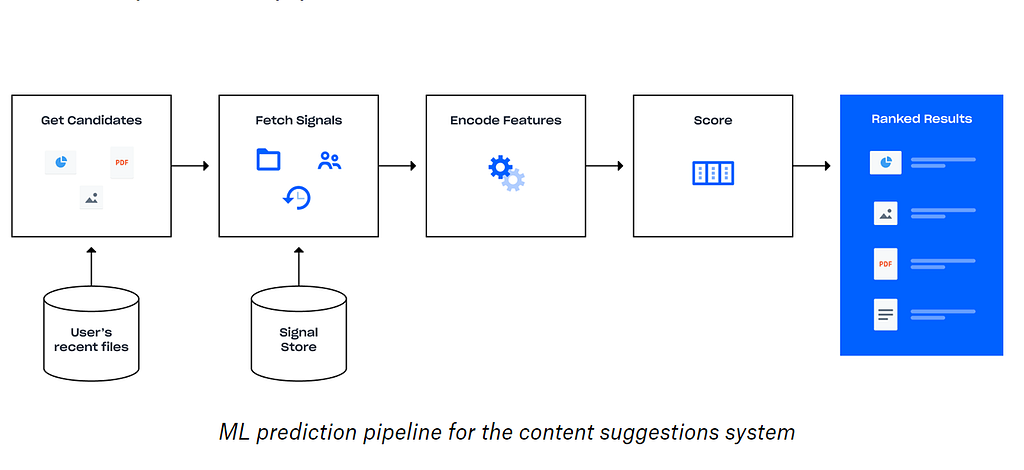
Dropbox has over 500 million users. It has users in over 200 countries and supports over 20 languages. This explains the scale of data within the company. 4000 files are edited every second on Dropbox. All this contributes to gigantic amounts of data. The syncing of data and keeping everything up to date for so many files is a daunting task in itself and Dropbox manages all this very efficiently. Another interesting thing within Dropbox is the heavy use of Python which is the language of choice when it comes to Data Science. The product itself uses Python which makes it even better when it comes to building data science applications. This is great for any Data Scientist to build on top of. Dropbox promises an ML heavy inclination for a Data Scientist which maybe very interesting for many of them.
The interview process starts with a recruiter screen. This interview goes through your resume and a chat over the phone by the recruiter to determine if you are a fit for the role. This is followed by a phone interview with the hiring manager. If you clear this interview, the next round is an onsite interview with team members. The onsite interviews might be ML heavy depending on your team and composition of the interview panel.
How would you set up a propensity model for the SMB team looking at companies between 5–200 employees?
How will you up-sell to a customer based on data?
Find out which employee reports to which manager using SQL?
How will you maintain a data metric?
Given a table with a series of values how will you determine if there are missing values and what are those?
Given a root directory, return all file paths grouped by duplicate files.
Describe how MD5 algorithm works.
From a user perspective how can you determine that the search experience is good or bad?
How can you analyze order data to determine churn?
Reflecting on the Questions
The data science team at at Dropbox is working in two areas. One on the BI analytics space to help improve renewal rate and reduce churn by using data. The second area is to improve the product itself like trying to know what file will be accessed next. The interview questions reflect this dichotomy with Dropbox. A data scientist should decide where he would fit and interview accordingly. Deep ML knowledge or knowledge of how to improve customer retention via data can help you land a job with one of the world’s largest document database!
Subscribe to our Acing AI newsletter, I promise not to spam and its FREE!
Thanks for reading! 😊 If you enjoyed it, test how many times can you hit 👏 in 5 seconds. It’s great cardio for your fingers AND will help other people see the story.
The sole motivation of this blog article is to learn about Dropbox and its technologies helping people to get into it. All data is sourced from online public sources. I aim to make this a living document, so any updates and suggested changes can always be included. Please provide relevant feedback.
I am writing my thesis on anomalies (errors) in data and how it effects neural networks. The main goal is to detect them with no extra information such as response time. The anomalies can occur in both the x and y variables so some data is mislabelled. Since there is not a lot of literature on this topic I have a few questions.
1) What techniques could I use. For mislabeled data I could simply select the observations which have the worst prediction results (not using these to train the data if the number of observations is small). For anomalies in the x variables I am considering creating a neural network to detect them. This network would include random x data as observations with a separate label (so for example 3 classes, A B en C (anomalie)). Again with a low number of observations if I use data with errors to train the network would recognise such data as true so I would have to exclude all data I am checking to be an outlier from training. But that would cost a lot of training time. Maybe such a procedure would only be worthwhile if I suspect data to be an outlier (poor prediction performance, x far away for other x’s). Other methods I am considering are the KNN and the isolation tree/forrest method.
After having a list of presumed anomalies I could train the model without them and see if performance increases. The number of outlier excluded from training can be chosen with a test set. For what number of outliers excluded is the performance best on a separate set without anomalies? or with bayesian techniques.
2) What papers to use? There is not a lot of good papers on this topic so I have problems finding good papers to cite. If anybody would have some ideas it would be greatly appreciated.
3) What data to use? right now I am considering a classification numerical dataset (so no images or audio) which can be modelled with a neural network. But not sure where to find good data. After that I can add some noise to the data.
Thank you very much for your time and have a great day 🙂